Crimson Publishers High Impact Journals

Showing posts with label journal of alternative medicine research. Show all posts

Wednesday, November 24, 2021

Development of Plant and Human Health and Climate Change at this age of Corona Virus Disease_Crimson Publishers

 Development of Plant and Human Health and Climate Change at this age of Corona Virus Disease by P Pushpangadan in Advances in Complementary & Alternative medicine_Journal of alternative medicine research


Abstract

Man is a passive agent for all the natural events. If man is inactive for all the natural hazards then how can he be active only for one climatic event i.e. global warming? Due to global warming temperature is increasing and the situation is deteriorating day by day. It is believed that there is increase in the percentage of carbon dioxide in the atmosphere and so the global warming is taking place. The carbon dioxide traps the long wave terrestrial radiations and increases the temperature. The increase in its percentage is due to automobile and industrialization. It means the increase in the parentage of CO2 is anthropogenic. Gangotri glacier has attracted international attention because of its rapid rate of retreat. No doubt it is retreating but the rate of retreat is decreasing for the last few years, so it is not in accordance with global warming. If global warming is only reason for the rapid rate of retreat, then all the glaciers should retreat at the same rate, which is not the case. It means there are local reasons other than global warming which are responsible for rapid rate of the retreat. Climate change is significant and lasting changes in the statistical distribution of weather patterns over periods ranging from decades to millions of year that is change in average weather. The most probable cause of climate changes are the human activities which are burning of fossil fuels and deforestation that leads to the increase in carbon dioxide production. There is a sudden outbreak of Corona virus disease which has killed over 2,34,000 people and infected more than 33 lakhs in 212 countries of the world.

Introduction

The remedy for sustainable development is the problem of climate change, pollution, and the depletion of natural resources. And many national education systems, at least in their rhetoric, are attempting to address this area of concern, particularly, but not exclusively, those nations that were signatory to United Nations Conference on Environment and Development (UNCED 1992) Agenda 21 of the 1992 Rio Earth Summit [1-3].

Toxic chemicals released by plastics such as -Styrene Trimmer, Bisphenol - A are deteriorating drinking water situation. It is uncountable to imagine consequences of 5250 billion plastic particles floating in water bodies. Substantial policies are formulated in developing countries against the use of plastic and its product such as complete ban of plastic bags and plastic bottles and imposing fine on usage of plastic. There should be a complete ban on micro beads in cosmetic and other personal care products such as toothpaste, face wash, shampoos. Decision on cutting trees stand between the most desirable development and economy enhancing goals or the continuation or the statuesque with the associated undesired consequences. Such decisions on cutting or trimming are often controversial. However, clear guidelines based on past consideration can help a great deal. Under the effect of global warming radial growth of trees and tree line advancement are being affected at high elevation vegetation in western Himalayan region by soil temperature and moisture. Rapid urbanization, change in income levels and life style resulted increased demand for the flowering potted plants.

Brundtland Commission on Environment and Climate Change

Brundtland Commission on environment (1987: 43) demand that “a development that meets the needs of the present without compromising the ability of future generations to meet their own needs”. It prevents us from seeking to know the world as it is, itself- ‘Sustainable development’ tends to reinforce the conventional curriculum attitude of regarding nature as most properly revealed. The value is more illogical and it is superimposed with the environmental education [4-7].

Bamboo has several advantages in terms of substantially and carbon fixing capacity compare to the other fast growing species. It can play a significant role in linking climate change mitigation to sustainable ecological balance of an area. The scientists are well aware about the potentials of bamboos and efforts are being made to solve the hurdles in the field of propagation and improvement. The soil physic- chemical characteristics and its constituents interact to each other and affect availability of nutrients to the plant roots. The status of soil provides significant clues to the nutrients availability, management practices for sustainable agriculture and selection of crop cultivars. Climate change is attributed to anomalies in temperature, precipitation, pressure, winds. Human induced global warming has caused rapid climate change and deleterious effects on human health. Climate change has spurred intense heat waves, drought, floods, wildfires, tropical storms, causing innumerable fatalities. Intensity and frequency of which have increased manifolds. Enhanced temperature provides better breeding conditions for microbes and their vector causing dengue, malaria, lyme disease, cholera, diarrhea, leptospirosis, hyper occurrences. There has been an increase in reported Hantavirus related defunct. In plants, secondary metabolites primarily meant for the defense against various stresses and human health. Amongst these, flavanoids have been extensively studied and become the target molecules for metabolic engineering [8-11].

National Environmental Education Advisory Council Report

In 2005, the National Environmental Education Advisory Council submitted a report to Congress on the status of EE in the United States, accompanied by a set of recommendations. The report noted the need to develop evaluation guidelines for environmental education, in order that ‘‘outcomes of individual initiatives can be appropriately measured and can contribute to a cumulative body of results that point to the long-term goals of environmental education- environmental literacy and quality of life.

Sairiver is drying up and it may be linked with global warming and declining ground water level. But we knew that the Ganga plain exhibits many abandoned channels indicating that many rivers in the past had dried. To rejuvenate the Sairiver, we should opt for artificial recharging of aquifers and rainwater harvesting. Carbon dioxide and the temperature on the earth were much higher than the present during Cretaceous period (65 million years ago). This period is well marked by marine transgression and there were no glaciers even on Antarctica at that time. Dinosaurs became extinct during the Cretaceous (65 million years ago) much before the evolution and existence of man on the planet earth. It shows that retreat and advancement of glaciers, increase and decrease in the percentage of carbon dioxide, rise and fall of global temperature, extinction and evolution of fauna and flora, dry and humid, cold and warm climatic stages are natural cycle. So, all the global climatic and environmental changes are natural, not anthropogenic. No doubt humans are acting as a catalyst for these changes. We are developing at the cost of environmental degradation. Therefore, we should try our best to check deforestation and pollution to sustain the environment. It is our fundamental duty to conserve the environment and think about sustainable development so that we can hand over a green earth to our coming generations [12-15].

Contamination of Drinking Water by Arsenic Pollution and Other Environmental Pollutants

Recent research papers say arsenic contamination in ground water has penetrated the food chain. That should have woken up governments. Yet the focus remained on drinking water, and the affected regions became the primary stake holder in the mitigation approach. The government has only been focused on drinking water in the affected regions with Public Health Engineering Department (PHED) being the primary stake holder in the mitigation approach. Mitigation measures are targeted in treatment of ground water or supply of surface water. Similarly, government testing of water sources for arsenic contamination has also been restricted to drinking water sources; it has not widened the scope of investigation to water sources used for irrigation. What has aided in this contamination our dependence on groundwater to cater to water needs. Modern groundwater –based irrigation techniques and a gradual shift from a rain fed crop to multiple irrigated crops has increased the crisis. The environmental pollution has been steadily increasing over the past several decades. Many harmful gases such as CO2, CO, SO2 etc. have reached up to dangerous levels. Plants can be successfully used to mitigate all type of pollutions and excessive atmospheric heat. Their leaves intercept, reflect, absorb, and transmit solar radiation. Plant help in controlling air pollution through acting as biological and physical nets. They cleanse the air by absorbing pollutant gases. Shade loving foliage and flowering plants in beds and pots create a great beautiful and healthy atmosphere for living beings [16].

Indiscriminate use of chemical fertilizers reduces soil health by killing the microorganisms that nourish it. The average organic carbon content in soil – an index for soil health –is a low 0.3-0.4 percent, according to Indian Council for Agricultural Research. This is well below the acceptable 1-1.5 percent. Farmers get caught in a vicious cycle when they use chemical fertilizers as it degrades soil quality, which in turn, escalates input use. National Academy of Agricultural Sciences says that NPK use ratio stands skewed at 6:7:2:7:1. The ideal nutrient use is 4:2:1. This is happening more in high urea consuming states, indicating urgent need for restoring soil nutrient balance. India needs to make policy changes to extract nutrients from faecal sludge, as this will serve the dual purpose of reducing its dependency on imports for phosphorus and improve soil health, thus boosting farmer’s income.

Environmental conditions are always changing rapidly throughout the world. This is caused by various reasons such as emission of large quantity of green house gases, civilization processes, industrialization etc. These environmental changes causes alternations in temperature, humidity, moisture status and biological activities, ultimately disturbs various ecosystems. Due to this variable climate changes the incident of pathogenic diseases increases. Though the government has increased the allocation to the Pradhan Mantri Fasal Bima Yojana - a scheme launched in 2016 to secure farmers against natural calamities and crop loss from Rs.14,000 crore in 2019-20.

Human health and Corona Virus disease

The Lunar New year break has been uncomfortably long and quiet for almost 50 million people in China. Since January 23, 2020 the authorities have locked down some 13 cities, including Wuhan in the province of Hubei, which is the epicenter of the deadly Coronavirus outbreak. Public transport and ride –hailing services have been suspended in this city of 11 million people. Trains and flights from the city have been suspended and people have been asked to leave their houses only for essential reasons like stocking up food. At places, the police has employed drones to ensure that people stay indoors. Travel restrictions and quarantine measures have also left streets, parks and shopping centres deserted in a dozen other cities, including Chibi, Zhenjiang, Huangshi, Xiantao, Enshi, Qianjiang and Xianning. The country’s largets metropolis, Shangahi, resembles a ghost city. As many criticize the government draconian enforcement of epidemic control laws government says the measures are to contain the spread of the virus that poses a “grave threat” as there is no preventive vaccine or cure for it. It has affected 118 countries with death of 38000 and 199,309 cases. More than a month after the first case was reported from China, there is little the world knows about the new corona virus. It has killed over 2000 people in China and infected more than 1,00,000 in 110 countries.

Scientists and health workers are racing against time to contain its spread. But they are yet to decipher the nature of the virus. The global medical fraternity is shadow boxing’ as the basics are still unknown”, says WHO Director General Tedros Adhanom Ghebreyesus. So far, the Chinese authorities identified the source of COVID-19 to the Huvan sea food market, where game meat, including live foxes, crocodiles, wolf puppies, porcupines and camel meat are sold. This market could have provided vital clues and helped researchers identify the real source of the virus. But the local authorities quickly cleaned the marker and shut it down. The “Jeevani” developed by JNTBGRI Scientist will be used to corona virus as an effective recuperative medicine. The use of “Jeevani” with a modified (turmeric and black pepper) to give it to the corona virus treated and cured people. It is the best known recuperative medicine for corona virus diseases.

Acknowledgement

The authors express their sincere thanks to Dr. Ashok K Chauhan, Founder President, RBEF and Amity Group of Institutions & Dr. Atul Chauhan, Dr. Atul Chauhan, Chancellor, Amity University, President, Ritnand Balved Education Foundation, CEO, AKC Group of Companies for facilities and encouragements. The authors also expresses their gratitude to Mrs. Sunija George for patiently typing this manuscript.

References

  1. Pushpangadan P, Rajasekharan S, Rathishkumar PK, Jawahar CR, Velayudhan NV, et al. (1988) Arogyapacha (Trichopus zelanicus Gaertn). The Ginseng of Kani tribes of Agasthyar hills (Kerala) for ever green health and vitality. Ancinet Science of Life 8(1): 13-16.
  2. Pushpangadan P, Rajasekharan S, Subramoniam A, Latha PG, Evans DA, et al. (1995a) Further studies on the pharmacology of Trichopus zeylanicus. Ancient Science of Life 9: 127-135.
  3. Pushpangadan P, Sharma AK, Rajasekharan S (1995b) Ethnopharmacology of Trichopus zeylanicus - The ginseng of Kerala. A review. In: Nyman PU, George U, Pushpangadan V (Eds.), Glimpses of Indian Ethnopharmacology, TBGRI publication, Trivandrum, India.
  4. Sharma AK, Pushpangadan P, Chopra CL, Rajasekharan S, Saradamma L (1989) Adaptogenic activity of seeds of Trichopus sylanicus Gaertn, The Ginseng of Kerala. Ancient Science of Life 8(3-4): 212-219.
  5. Banjot K, Alok G (2020) Corona virus, Down to Earth.
  6. Brundtland Commission (1987) Our Common Future [World Commission on Environment and Development], Oxford University Press, Oxford, USA.
  7. Dhruv SS (2020) Facts and Impacts of climate change, In: Second National conference on climate change: agriculture, Biodiversity and Human health from Feb 22-23, Clean & Green Environmental Society, CSIR-NBRI, Lucknow, India.
  8. Jitendra (2020) Expert’s guide to rural distress – this year’s budget has all the ingredients to deepen India’s farm crisis, Down to Earth 16- 29 Feb 2020.
  9. Michael B (2007) Environmental education and the issue of nature. Journal of Curriculum Studies 39(6): 707-721.
  10. National Environmental Education Advisory Council (2005) Setting the Standard, Measuring Results, Celebrating Successes: A Report to Congress on the Status of Environmental Education in the United States. United States Environmental Protection Agency. Report Number: EPA 240-R-05-001, pp. 55.
  11. Nicole MA, Charlotte C, Elin K (2014) An exploration of future trends in environmental education research. Environmental Education Research 19(4): 499-520.
  12. Rajeev K (2020) House plants combating air pollution. Second National conference on climate change: Agriculture, Biodiversity and Human health from Feb 22-23, Clean & Green Environmental Society, CSIR-NBRI, Lucknow, India.
  13. Shagun K (2020) Treasure in excreta, Down to Earth, 16-31 January 2020.
  14. Simran S, Trinayani S (2020) Lurking in the shadows, Down to Earth 1-16 February 2020.
  15. Tejaswini P, Pandey SN (2020) Changing environmental condition and human health. Second National conference on climate change: agriculture, Biodiversity and Human health from Feb 22-23, Clean & Green Environmental Society, CSIR-NBRI, Lucknow, India.
  16. WHO (2020) Covid-19 Corona virus Outbreak dated 18th March 2020.

For more articles in Journal of alternative medicine research
Please click on below link: https://crimsonpublishers.com/acam/

Friday, June 4, 2021

It Has Been Half a Century Since President Nixon Declared War on Cancer: Destabilization of Abnormal Methylation Enzymes Has the Blessing of the Nature to Win the War on Cancer_ Crimson Publishers

 It Has Been Half a Century Since President Nixon Declared War on Cancer: Destabilization of Abnormal Methylation Enzymes Has the Blessing of the Nature to Win the War on Cancer by Ming C Liau,* in Advances in Complementary & Alternative medicine_ journal of alternative medicine research


Abstract
President Nixon declared war on cancer in 1971. When a president of the USA declares a presidential project, he has the determination to achieve the goal in 5 years. There were two precedents: the Manhattan Project of President Roosevelt and the Apollo Project of President Kennedy. In both precedents, nuclear physicists and rocket engineers were successful to achieve the presidential project within 5 years. Health profession failed the challenge during the 5 years of intensive presidential support, and in the following 44 years of earnest public expectation. Is it so difficult to put cancer away? Yes, as we have pointed out previously [1], that in theory it was not possible to solve cancer with conventional cell killing strategies, because cancer stem cells (CSCs) stood in the way. And no, there were other ways to get rid of CSCs and to solve problems confronting cancer

https://crimsonpublishers.com/acam/fulltext/ACAM.000630.php

Crimson Publishers: https://crimsonpublishers.com/

For more articles in journal of alternative medicine research,
Please click on below link: https://crimsonpublishers.com/acam/

Wednesday, March 17, 2021

Evaluation of the Structural Properties and Isotopic Abundance Ratios of Consciousness Energy Treated Pyridoxine Using LC-MS, GCMS, and NMR Spectroscopy_ Crimson Publishers

 Evaluation of the Structural Properties and Isotopic Abundance Ratios of Consciousness Energy Treated Pyridoxine Using LC-MS, GCMS, and NMR Spectroscopy by Snehasis Jana* in Advances in Complementary & Alternative medicine_ journal of alternative medicine research


Abstract
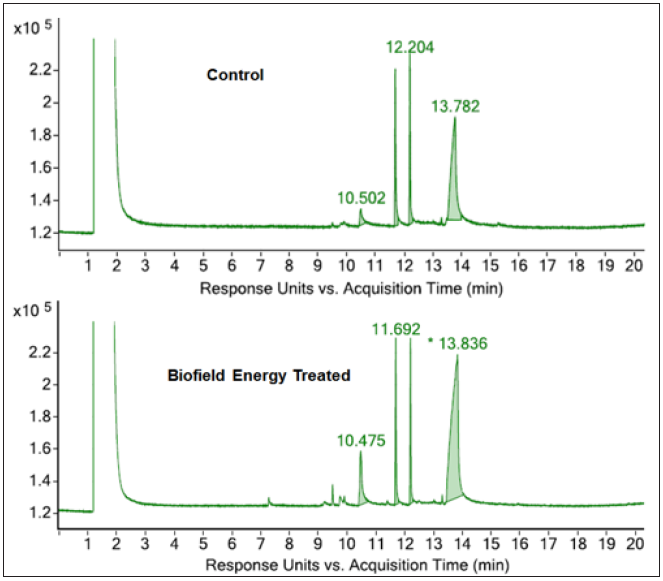
Pyridoxine (vitamin B6) is an essential water-soluble vitamin widely used in nutraceutical and pharmaceutical formulations for the prevention and treatment of vitamin B6 deficiency and other diseases. The objective of the study was to explore the impact of the Trivedi Effect®-Consciousness Energy Treatment on the isotopic abundance ratios and structural properties of pyridoxine hydrochloride using LC-MS, GC-MS, and NMR analytical techniques. The pyridoxine sample was equally divided into control/ untreated and Biofield Energy Treated pyridoxine. The treated pyridoxine sample received Biofield Energy Treatment (the Trivedi Effect®) remotely for ~3 minutes by Mr. Mahendra Kumar Trivedi, who was located in the USA, while the test samples were located in the research laboratory in India. The treated sample was designated as the Biofield Energy Treated sample. The LC-ESI-MS analysis of both of the pyridoxine samples showed the protonated parent ion mass at m/z 170 (calcd for C8H12NO3+, 170.08) at retention times (Rt) 2.41 minutes. But, the relative peak intensities of the treated pyridoxine were significantly improved compared to the control sample. The isotopic abundance ratios of PM+1/PM (2H/1H or 13C/12C or 15N/14N or 17O/16O) and PM+2/PM (18O/16O) were significantly increased by 11.92% and 153.85%, respectively in the treated pyridoxine compared to the control sample. Thus, 2H, 13C, 2H, 15N, 17O contributions from C8H12NO3+ to the isotopic m/z 171 and 18O contribution to the isotopic m/z 172 was significantly increased in the treated sample compared with the control sample. The GC chromatographic peak area% and GC-MS mass peak intensity of the treated sample was significantly increased by 15.88% and 32.26%, respectively compared to the control sample. The proton and carbon signals for CH3, CH2, NH2, CH, =C=, and C-OH groups in the 1H and 13C NMR spectra of the control and treated samples were similar. The increased mass peak intensities, peak area%, and isotopic abundance ratios in the Biofield Energy Treated pyridoxine might be the impact of the Trivedi Effect®-Consciousness Energy Treatment via the possible mediation of neutrinos, which further lead to the change in the kinetic isotope effects of the treated pyridoxine. Thus, the Trivedi Effect® Treated pyridoxine might be advantageous for designing better nutraceutical, dietary supplements and/or pharmaceutical formulations which might provide better therapeutic response against vitamin B6 deficiency, hereditary sideroblastic anemia, premenstrual syndrome, cardiovascular disease, pyridoxine-dependency seizures, febrile seizures, pulmonary tuberculosis, metabolic disorders, Alzheimer’s disease, cancer, hyperhomocysteinemia, anxiety, asthma, depression, attention deficit hyperactivity disorder, dysmenorrhea, akathisia, angioplasty, birth outcomes, cognitive function, hyperkinetic cerebral dysfunction syndrome, carpal tunnel syndrome, hypertension, immune system function, breast pain, pregnancy-induced nausea and vomiting, lactation suppression, McArdle’s disease, osteoporosis, Tardive dyskinesia, autism, stroke recurrence, etc

https://crimsonpublishers.com/acam/fulltext/ACAM.000629.php

Crimson Publishers: https://crimsonpublishers.com/

For more articles in journal of alternative medicine research,
Please click on below link: https://crimsonpublishers.com/acam/


Tuesday, December 22, 2020

Nutraceutic Uses and Ancestral Knowledge of the Quinoa (Chenopodium Quinoa Wild) and Wild Relatives in the Food of Andean Native Peoples_ Crimson Publishers

 Nutraceutic Uses and Ancestral Knowledge of the Quinoa (Chenopodium Quinoa Wild) and Wild Relatives in the Food of Andean Native Peoples by Ángel Mujica* in Advances in Complementary & Alternative medicine_ journal of alternative medicine research


Abstract

Quinoa, ancestral grain, is medicine and basic food of the Andean man, for the ideal balance of essential amino acids, other nutrients for normal development and growth, has nutraceutical, orthomolecular, anti-aging, anti-stress and medicinal qualities. The research methodology was the accompaniment and exchange of knowledge with bilateral information flow and ethnographic approach (continuous ethnobotanical-anthropological exploration, with exchange of bilateral and multilateral knowledge) in Andean communities, for 14 years (2005/2019), the ancestral medicinal uses given to quinoa by Andean man so far are to: treat broken bones, twists, dislocations, blows and fortify bones (contains quadruple Ca that corn and triple rice, easy to absorb), contains lithium avoiding stress and sadness, galactogenic increasing milk secretion in mothers, prevents uterine cancer, menopause problems for their phytoestrogens (Daidzein and cinesteine), prevents osteoporosis, organic and functional alterations that produce the lack of estrogen, contributes to curing TBC by having protein of high biological value, ideal balance of essential amino acids and elevated lysine, shaping cells, tissues and organs of the human body, regulates cholesterol levels by dietary fiber content and unsaturated fatty acids (oleic acid, linolenic, linoleic), being fiber 6% of weight of the grain, its intake favors intestinal transit; contains antioxidants: betalains, betazhantine to preserve health, is energy source for muscles, brain, nervous system, for containing Alanine, plus Glycine acting as brain tranquilizing neurotransmitter, regulating motor functions and Proline, participant in joint repair and healing injuries; anaemia by content of iron; saponin prevents polyglobulin for its hemolytic action; native varieties and wild relatives are used in food [1-28], medicine [2,29], flavorings, dyes, seasoning, ornamental, biocides and for cultural aspects, local preferences, taste, texture, smell, color; grains and plants used in ritualities counteracting teluric diseases (magical-religious plants) and biological indicators.

https://crimsonpublishers.com/acam/fulltext/ACAM.000628.php

For more articles in journal of alternative medicine research,
Please click on below link: https://crimsonpublishers.com/acam/

Thursday, February 27, 2020

The Secret Behind the Natural Sex Reversal in Rice Field Eel (Monopterus albus) Remains Unknown- Crimson Publishers

The Secret Behind the Natural Sex Reversal in Rice Field Eel (Monopterus albus) Remains Unknown by Ayah Rebhi Hilles in Advancesin Complementary & Alternative Medicine- Crimson Publishers_ Journal of Alternative and Complementary Medicine


Monopterus albus, the rice field eel (Zuiew), it is under Synbranchidae family; Synbranchiformes order. It lives in the rice fields, swamps, and muddy ponds in different Asian countries. M.albus is a hermaphrodite and undergoes sex reversal naturally Female are intersexes, they have both female and male sex organs with oocytes and spermatocytes in their gonads, and then they become males [1]. The sex reversal of M.albus normally happens after spawning when the eel grows to 35 to 45cm in length [2]. There are many researchers studied the principle of natural sex reversal in M.albus, one of these studies says that this process based on genetic switch-mechanism which the differentiation and maturation of female germ-cells would cease then the epigenesis of male germ-cells and the interstitial Leydig"s cells started, this sexuality shifting from female to male involve the stimulation of some regulators and the mediation of biochemical components and physiological events and environmental factors might also play a role in this series of events [3]. In another study, it has been reported that M.albus undergoes reversal of sex from the female to male genetically which involve the expression of regulatory genes.

For more open access journals in Crimson Publishers please click on link:
https://crimsonpublishersresearch.com/

Wednesday, September 11, 2019

Complementary Treatment of Mood Disturbances in Terminally Ill Oncological Patients with the Aphanizomenon Flos Aquae Extract Klamin®- Crimson Publishers

Complementary Treatment of Mood Disturbances in Terminally Ill Oncological Patients with the Aphanizomenon Flos Aquae Extract Klamin® by Scoglio Stefano in Advances in Complementary & AlternativeMedicine- Crimson Publishers: Journal of Alternative and Complementary Medicine


Klamin® is a proprietary extract of the microalgae Aphanizomenon flos aquae, which concentrates both the phenylethylamine (PEA) naturally contained in the microalgae, and microalgal molecules, such as AFA-phycocyanins and mycosporine-like amino acids (MAAs), which act as physiological MAO-B inhibtors, thus allowing PEA to reach the brain and explete its numerous neuro-modulating activities. Based on this premise, and on previous studies showing the mood enhancing activity of the  extract, we tested its ability to improve the very difficult condition of terminal cancer patients, with special reference to their levels of depression, anxiety and fatigue. The results obtained were positive, in spite of the extreme condition of the patients, with significant improvement of their levels of depression and anxiety, and a lesser but stillrelevant improvement of their level of fatigue. This preliminary study warrants the need for further research on this very relevant subject.

For more open access journals in Crimson Publishers please click on link: https://crimsonpublishers.com/


Friday, August 23, 2019

Rasa Panka (Fundamentals of Dravya Guna Shastra Vijnana)_Crimson Publishers

Rasa Panka (Fundamentals of Dravya Guna Shastra Vijnana) by Venkata N Joshi in Advances in Complementary & Alternative medicine


Rasa' in any subject of life is very interesting and fundamental. Rasa as a basic quality of life begin with the soup of organic chemistry. Carbon, hydrogen, Nitrogen and oxygen along with phosphorus and sulphur consists of 96% of molecules of life in modern chemistry where as rest of minerals and elements are only traces or insignificant to its counterpart of understanding 64 arts of life in combination of emotional Rasa or Bhava, (nava rasa-09) and 63 Vikalpa of Rasa Bheda from 06 rasa etc. (shad anga pradhana shareere shad eva rasaa).

For more open access journals in CrimsonPublishers please click on link: https://crimsonpublishers.com/
For more articles in open access Complementary medicine journals please click on link: https://crimsonpublishers.com/acam/

Wednesday, August 7, 2019

Study of Methanolic Extract of Leaves Calotropis gigantea (L.) As an Anti-Solar- Crimson Publishers


Study of Methanolic Extract of Leaves Calotropis gigantea (L.) As an Anti-Solar by Gharge Varsha Gajanan in Advances in Complementary & Alternative Medicine- Crimson Publishers: Journal of Alternative and Complementary Medicine


Objective: The present study aimed at the phytochemical examination and anti-solar activity of Calotropis gigantea L. (leaf) methonolic extract has more flavonoid content based on this chemical substance photo protective activity was evaluated using UV visible spectrophotometry, where the method is diffused transmittance and the range of UV-visible about 200-400nm.
Methods: The pulverized dried Calotropis gigantea L. leaves were extracted with Methanol using soxhlet apparatus. Methanol extract were filtered & evaporated to dryness. The photo protective activity was evaluated by using UV visible spectrophotometry, where the method it is diffused transmittance and the range of UV-visible about 200-400nm for absorption.
Results: The UV scanning absorption spectra of the extract showed very strong absorption at 0.273A with max at 397nm.
Conclusion: The extract has an ability to absorb in the entire UV range.

For more open access journals in Crimson Publishers please click on link: https://crimsonpublishers.com/
For more articles in Journal of Alternative and Complementary Medicine please click on link: https://crimsonpublishers.com/acam/

Friday, July 5, 2019

Study of Methanolic Extract of Leaves Calotropis gigantea (L.) As an Anti-Solar- Crimson Publishers


Study of Methanolic Extract of Leaves Calotropis gigantea (L.) As an Anti-Solar by Gharge Varsha Gajanan in Advances in Complementary & Alternative Medicine- Crimson Publishers: Journal of Alternative and Complementary Medicine


Objective: The present study aimed at the phytochemical examination and anti-solar activity of Calotropis gigantea L. (leaf) methonolic extract has more flavonoid content based on this chemical substance photo protective activity was evaluated using UV visible spectrophotometry, where the method is diffused transmittance and the range of UV-visible about 200-400nm.
Methods: The pulverized dried Calotropis gigantea L. leaves were extracted with Methanol using soxhlet apparatus. Methanol extract were filtered & evaporated to dryness. The photo protective activity was evaluated by using UV visible spectrophotometry, where the method it is diffused transmittance and the range of UV-visible about 200-400nm for absorption.
Results: The UV scanning absorption spectra of the extract showed very strong absorption at 0.273A with max at 397nm.
Conclusion: The extract has an ability to absorb in the entire UV range.

For more open access journals in Crimson Publishers please click on link: https://crimsonpublishers.com/
For more articles in Journal of Alternative and Complementary Medicine please click on link: https://crimsonpublishers.com/acam/

Friday, June 21, 2019

Perspectives of Complement System in Inflammatory Diseases- Crimson Publishers

Perspectives of Complement System in Inflammatory Diseases by Lalit M Srivastava* in Advances in Complementary & Alternative medicine-Crimson Publishers: Journal of Traditional and Complementary Medicine


The Complement System provides a rapid and efficient means to protect the host from invasive microorganisms. Due to its diverse biological activities, complement is the major mediator of inflammation, a natural response to the host tissue to any injury. Evidences are available to show that complement significantly contributes to the regulation of immune response. Furthermore, the effector functions arising from complement activation carry the potential for harming the host by directly or indirectly mediating inflammatory tissue destruction. Inappropriate or excessive activation of the complement system can lead to harmful, potentially life-threatening consequences due to severe inflammatory destruction. Genetic complement deficiencies or complement depletion have been found to be beneficial in reducing tissue injury of severe complement dependent inflammation.

For more open access journals in Crimson Publishers please click on link: https://crimsonpublishers.com/

Visual-cognitive Skills and Physical Qualities in Elite Soccer: Practical Considerations for Training and Return-to-Play Protocols: Crimson Publishers

Visual-cognitive Skills and Physical Qualities in Elite Soccer: Practical Considerations for Training and Return-to-Play Protocols by Lukasz...