Crimson Publishers High Impact Journals

Showing posts with label Journal of Rehabilitation Medicine. Show all posts

Friday, October 1, 2021

Different Types of Cysts: Endodontic Versus Surgical Treatment_ Crimson Publishers

 Different Types of Cysts: Endodontic Versus Surgical Treatment by Lakhdar F* in Examines in Physical Medicine & Rehabilitation_ Journal of Rehabilitation Medicine


Introduction

The periapical cyst is an inflammatory cyst which results because of extension of infection from pulp into the surrounding periapical tissues. As well as we know the etiology can be caries, irritating effects of restorative materials, trauma, pulp death due to development defects. The cyst is usually discovered when periapical radiographs of tooth with nonvital pulp are taken, because it is asymptomatic and presents acute pain diagnosis is confirmatory only with biopsy of these lesions [1]. We usually meet it mainly highest in anterior maxilla or in mandibular posterior teeth, separate small cysts arise from each apex of multirooted teeth. In terms of signs and symptoms: slowly enlarging swelling attains a large size; as the cyst enlarges in size, the covering bone becomes thin and exhibits springiness due to fluctuation. At the level of the affected tooth we will observe that it is nonvital, discolored, fractured or shows failed root canal. We have two types of periapical cysts: one is cyst formation in periapical area which involves epithelial lining has no communication with root canal. The other named pocket or bay cyst which means epithelial lined cystic cavity is in communication with the root canal system. According to the World Health Organization (WHO), an apical cyst (pocket or true) is classified as an inflammatory and not a neoplastic lesion. The incidence of cysts within periapical lesions varies between 6 and 55% [1]. From a radiological point of view periapical cyst appears as round, pear or ovoid-shaped radiolucency, outlined by narrow radiopaque margin. For treatment we have five different methods: endodontic treatment, apicoectomy, extraction (severe bone loss), enucleation with primary closure, marsupialization (in case of large cysts)

https://crimsonpublishers.com/epmr/fulltext/EPMR.000547.php

Crimson Publishers: https://crimsonpublishers.com/

For more articles in Journal of Rehabilitation Medicine,
Please click on below link:
https://crimsonpublishers.com/epmr/

Tuesday, July 20, 2021

The Effects of Detraining on Cardiovascular Parameters in Distance Runners_ Crimson Publishers

 The Effects of Detraining on Cardiovascular Parameters in Distance Runners by Gerasimos V Grivas* in Examines in Physical Medicine and Rehabilitation: Open Access_ Journal of Rehabilitation Medicine


Abstract
Detraining is the reduction of performance that happens after the cessation of training and is reflected by anatomic and physiologic changes. The purpose of this study was to investigate the effects of reduce training on cardiovascular parameters in distance runners. Many studies showed reduce of VO2 max and anaerobic threshold after detraining. On the other hand, only one study examined the effect of detraining on running economy and did not observe a decline.

Introduction
Detraining is the partial or complete loss of training-induced adaptations, in response to an insufficient training stimulus [1]. In general, significant conditioning is lost after 2-6 weeks of insufficient training. In other words, the individual becomes ‘less fit’ [2]. Therefore, recognizes that stopped, or reduction of a training stimulus leads to a decline in specific conditioning. The rate of ‘fitness’ decrement with training cessation does vary from one physiological parameter to the another and so are here divided logically. The most important parameters that are affected from reduce training or detraining is maximal oxygen uptake (VO2max), anaerobic or lactate threshold and running economy. Therefore, the purpose of this study was to investigate the effects of reduce training on cardiovascular parameters in distance runners.

https://crimsonpublishers.com/epmr/fulltext/EPMR.000546.php

Crimson Publishers: https://crimsonpublishers.com/

For more articles in Journal of Rehabilitation Medicine,
Please click on below link: https://crimsonpublishers.com/epmr/
Monday, April 26, 2021

The Effects of Detraining on Cardiovascular Parameters in Distance Runners_ Crimson Publishers

 The Effects of Detraining on Cardiovascular Parameters in Distance Runners by Gerasimos V Grivas* in Examines in Physical Medicine and Rehabilitation: Open Access_ Journal of Rehabilitation Medicine


Abstract
Detraining is the reduction of performance that happens after the cessation of training and is reflected by anatomic and physiologic changes. The purpose of this study was to investigate the effects of reduce training on cardiovascular parameters in distance runners. Many studies showed reduce of VO2 max and anaerobic threshold after detraining. On the other hand, only one study examined the effect of detraining on running economy and did not observe a decline

Introduction
Detraining is the partial or complete loss of training-induced adaptations, in response to an insufficient training stimulus [1]. In general, significant conditioning is lost after 2-6 weeks of insufficient training. In other words, the individual becomes ‘less fit’ [2]. Therefore, recognizes that stopped, or reduction of a training stimulus leads to a decline in specific conditioning. The rate of ‘fitness’ decrement with training cessation does vary from one physiological parameter to the another and so are here divided logically. The most important parameters that are affected from reduce training or detraining is maximal oxygen uptake (VO2max), anaerobic or lactate threshold and running economy. Therefore, the purpose of this study was to investigate the effects of reduce training on cardiovascular parameters in distance runners.

https://crimsonpublishers.com/epmr/fulltext/EPMR.000546.php

Crimson Publishers: https://crimsonpublishers.com/

For more articles in Journal of Rehabilitation Medicine,
Please click on below link: https://crimsonpublishers.com/epmr/
Tuesday, February 9, 2021

Rehabilitation in Connective Tissue Diseases_ Crimson Publishers

 Rehabilitation in Connective Tissue Diseases by Romani I* in Examines in Physical Medicine and Rehabilitation: Open Access_ Journal of Rehabilitation Medicine


Abstract

Connective Tissue Disease (CTD) is a heterogeneous group of chronic inflammatory conditions characterized by involvement of conjunctive tissue and a common autoimmune signature. These diseases include systemic lupus erythematosus, polymyositis, dermatomyositis, systemic sclerosis, Sjogren’s syndrome, mixed CTDs, and undifferentiated CTDs. Cutaneous, articular, muscular, pulmonary and cardiovascular manifestations are among the most frequent during these diseases and often lead to a functional and physical disability that sometimes severely affects the quality of life of these patients. Rehabilitation and physical therapy play a crucial role in the management of patients with CTDs but despite their proven benefits, they are often neglected and represent a challenge for clinicians. This overview focuses on the rehabilitation of cutaneous, musculoskeletal and cardio-pulmonary involvement of CTDs.

https://crimsonpublishers.com/epmr/fulltext/EPMR.000545.php

Crimson Publishers: https://crimsonpublishers.com/

For more articles in Journal of Rehabilitation Medicine,
Please click on below link: https://crimsonpublishers.com/epmr/
Tuesday, November 10, 2020

The Influence of The Exercise Programs on The Boy’s Self-Concept_ Crimson Publishers

 The Influence of The Exercise Programs on The Boy’s Self-Concept by Dao CT* in Examines in Physical Medicine and Rehabilitation: Open Access_ Journal of Rehabilitation Medicine


Abstract

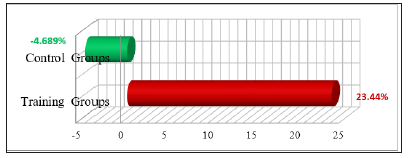
This study is to investigate the effectiveness of an exercise program for children from 10 to 11 years old. In this study, 30 subjects were divided into two groups of equal control and training. After completing the procedure, the participants in the training group performed the gymnastics training program for 12 weeks and the control group did nothing. Data collection tool is a demographic questionnaire and a scale of self-concept Piers-Harris. Kolmogorov-Smirnov test is used to test the normal distribution of samples. The research results show that in the training group, the size of the concept of self and the general selfconcept of children before and after exercise instrument increased significantly. The results also show that the size of happiness and satisfaction of children, both in the control group and in the training group, is significantly different. The study concluded that a training program in the field of gymnastics training has significantly increased the level of self-concept of children.

Participating in physical activities, in addition to having a positive impact on physical characteristics, also affects mental qualities, and it is obvious that physical activity also has physiological and psychological benefits. Compared to traditional interventions such as psychotherapy, psychological, social and pharmaceutical interventions, physical activity has some relatively cost-effective side effects [1]. Moreover, physical activity can have beneficial effects in cardiovascular disease, diabetes, high blood pressure, cancer, osteoporosis and obesity. Research in this area shows that physical activity can improve mental health [2]. Nolis says that the physical image (the concept of physical self) includes the person’s emotions, behaviors and values to the person and how to look at an individual’s appearance and all the emotions forming their physical image [3].

Many factors such as speed and quality of communication between children and parents, inspiring and encouraging family members, especially parents [4], social interactions such as reactions of others, age, sex and sports activities, affecting the concept of self. A person has a strong and positive self-concept, compared to a person with a poor self-concept, having a completely different view of the world [5]. The concept of self makes the person more sensitive to his own information and makes it easier to encrypt and retrieve [6]. The reason for this is that personal information is analyzed more deeply and carefully, and the information of the most self-organizing information networks lies in the memory of individuals, and the more often the information is, the more the stronger the reminder [7]. The concept of physical self is a branch of self-concept that indicates awareness and self-evaluation of their own bodies. Many studies have shown that there is a positive and meaningful relationship between sports activity and self-concept.

https://crimsonpublishers.com/epmr/fulltext/EPMR.000544.php

For more articles in Journal of Rehabilitation Medicine,
Please click on below link: https://crimsonpublishers.com/epmr/

Visual-cognitive Skills and Physical Qualities in Elite Soccer: Practical Considerations for Training and Return-to-Play Protocols: Crimson Publishers

Visual-cognitive Skills and Physical Qualities in Elite Soccer: Practical Considerations for Training and Return-to-Play Protocols by Lukasz...