Crimson Publishers High Impact Journals

Monday, February 7, 2022

Data Science in Neuroscience: A Review of The EEG Analytical Workflow_Crimson Publishers

Data Science in Neuroscience: A Review of The EEG Analytical Workflow by Cugliari Giovanni in Research & Investigations in Sports Medicine_Sports Medicine - Free Medical Journals


Abstract

In the era of big data, quantitative-based approach has become a very useful tool in neuroscience studies. Neural phenomena that occur at the level of the cerebral cortex generates electric activity that can be recorded using electroencephalography (EEG). We can divide into three macro areas, considering non-pathological studies in human movement, the suite of interesting topics as i) physical stimuli and body postures, ii) visual stimuli and experience, and iii) auditory stimuli and motor imagery. In this context, data analysis represents a fundamental core of tasks with the aim to extract accurate and consistent information. To facilitate the replicable identity, scientific research is therefore interested in developing statistical procedures of biological data analysis. The aim of this review is to explain the analytical workflow applied to the EEG signal. Through theoretical and practical feedback, this work will be useful for data scientists, neuroscientists, statistics, engineers or physiologists.

Keywords: EEG; Data science; Human movement; Neuroscience; Statistical modeling; Clustering; ICA

Introduction

Electroencephalography (EEG) is a non-invasive technique that allows better performance compared to other neuroimaging techniques, such as magnetoencephalography (MEG), considering the time resolution of the recorded signal; it can be considered as the representation of the postsynaptic potentials generated at the level of the cortex of the brain by neurons synchronous activity. In detail, EEG represents the sum of several waves at different frequencies and amplitudes, generated by specific brain activity related to particular tasks (sensorial, movement-related or cognitive). Some event-related potentials (ERPs) are associated with certain states of consciousness specially induced or brain-specific pathological conditions (like epilepsy). From the comparison between the spontaneous activity (used as a baseline) and its variation during the induced activity is possible to identify in real-time the areas and the modalities of the change electrical activity. The strength of this type of analysis is the time resolution, in fact, is possible to obtain the information every millisecond of electrical activity; its major limitation is the spatial resolution, the electrodes pick up only the electrical signal that reaches the surface of the skull and just due to reconstruction signal algorithms is possible to locate the real source of signal. In this context, data science represents a very informative tool from the signal recording to the study funding elaboration. As explained in the discussion section, the analytical workflow can be divided into five macro-areas, each one with a suite of peculiar characteristics: data analysis tool, preprocessing, data preparation, component calculation, clustering optimization, and statistical modeling.

Discussion

Different study designs are required to answer different research questions. EEG experiments require preparation of participants and set-up of the equipment making sure that the methods return the desired outcomes to maximize scientific research standards such as objectivity, reliability, and validity. After data mining procedures, filtering the continuous data minimizes the introduction of artifacts; during data preparation, artifacts were evaluated with the aim to control for outliers and missing values; the third phase consists in the component calculation, independent component analysis (ICA) produces the maximally temporally independent signals that can be considered in the inferential analyses; the goal of the clustering function is to compute an N-dimensional cluster position vector for each component; Finally, the statistical modeling phase shows the potential alternatives to analyze data considering the aim of the study with the aim to validate the association estimates.

Data analysis tool

For data mining, recording, processing, and modeling event-related and continuous electroencephalography (EEG) is important the choice of the appropriate analytical tool: a MATLAB toolbox named EEGLAB provides a programming environment and interactive graphical user interface (GUI) for accessing, visualizing, measuring, manipulating, and storing electrophysiological data; it allows several modes of visualization of the single-trial and averaged data [1,2].

Preprocessing

To build EEG scalp maps, the dataset must contain information about the locations of the recording electrodes: if the data have been recorded with a reference, they can usually be re-referenced to any other reference channel. Filtering the continuous data, using high/low/bandpass, minimizes the introduction of artifacts (linear trends); this step uses the linear finite impulse response (FIR), forward and backward, to ensure that the delay phase introduced by the filter is nullified. Procedures to study the event-related EEG signals of continuously recorded EEG data can be summarized in three tasks: i) specifying the considered baseline data epochs time; ii) extracting data epochs time to events of interest; iii) removing a mean baseline value from each epoch to extract the potential effect of the indagated outcome.

Data preparation

Data scrolling is useful to reject epochs of data (channels with outliers, after kurtosis or probability tests) which contains artifact; the normalization procedure of the voltage allows better visualization of data. A signal is analyzed using power spectrum, which provides information on the signal power at each frequency. The Fourier transform decomposes the EEG time series into the power spectrum, in which the power is the square of the EEG amplitude, and the amplitude is the integral average of the EEG signal during the epoch sampled. The frequency resolution is given by the inverse of the time value of the epoch. Lastly, it possible to evaluate the event-related cross-coherence, to determine the degree of synchronization between the activations of two channels.

Component calculation

ICA components of EEG data are maximally temporally independent but spatially unconstrained and therefore they are able to find maps representing the projection of a partially synchronized region of cortex. All three algorithms available return near-equivalent components (Runica, Jader, and Fastica). Missing data treatment may be replaced using an approach based on spherical interpolation. Parametric or bootstrap statistics (non-parametric statistics) may be used to compare a given outcome in experimental study design.

Clustering optimization

After post hoc analysis (to control for multiple comparisons) means and neural network clustering methods are available. Several measures to construct the cluster can be used: ERP, power spectrum, ITC (Intertrial coherence), component scalp maps and their equivalent dipole model locations. The pre-clustering function represents the first step in this process: the goal is to compute an N-dimensional cluster position vector for each component: then, cluster position vectors will be used to measure the distance of components from each other considering the N-dimensional cluster space. At this phase the normalization procedure is required, this involves dividing the measurement data of all principal components by the standard deviation of the first PCA (principal component analysis) component. There are several steps involved in the independent component clustering procedure: i) identifying a set of EEG datasets containing ICA weights ii) specifying group, task condition, and session for each dataset, iii) identifying the component in each dataset to cluster, iv) specifying and computing measures to use in clustering, v) performing component clustering for each investigated measures, vi) viewing the scalp maps and activity measures of the component clusters, vii) performing signal processing and statistical estimation on the clusters, viii) studying the consistency and properties, using validation procedures, of the generated component clusters.

Statistical modeling

It’s possible to perform parametric and non-parametric tests (paired t-test, unpaired t-test, ANOVA) on each of the investigated measures. Matched/unmatched data samples can be used as an extension of paired/unpaired data samples when there are more than two samples. Resampling methods help to perform statistical inference without assuming a known probability distribution for the data. Instead, the bootstrap method consists of drawing random sub-samples followed by the randomization method (shuffling data samples). Recent progress in signal processing and information theory has seen the development of blind source separation methods, which attempt to find a coordinate frame onto which the data projections have minimal overlap. Second this concept, ICA is a family of linear blind source separation methods: the core mathematical concept of ICA is to minimize the mutual information among the data projections. ICA is being applied to various biomedical signal processing problems that include: i) performing a speech from noise separation, ii) decomposing functional resonance imaging data, and iii) separating brain area activities and artifacts mixed in the electro-encephalographic activity. When performing a large number of statistical inferences, it is necessary to correct for multiple comparisons (Bonferroni, Holms method, False Discovery Rate, Max method, Cluster method).

Conclusion

In this section, we explain a brief overview of potential experiments in the context of human movement. Some studies that we have conducted in recent years have in fact been dedicated to deepening peculiar and niche areas. We will show three macro-categories of studies ordered by type of stimulus and considered sub-task: i) physical stimuli and body postures; ii) visual stimuli and experience; iii) auditory stimuli and motor imagery. In detail we valuated all bands considering ERP, scalp maps and time-frequency.

Physical stimuli and body postures

We have indeed studied to evaluate the timing and characteristics of electrocortical activity during stretch reflex evocation of the quadriceps femoris; we also studied the variations during different body postures. Our findings improve the understanding of the neurophysiological dynamics following the stretch reflex after concussion of the patellar tendon, executed in different postures, considering scalp-map, power spectra, and time-frequency analysis. The use of scalp-map and power spectra analysis techniques represents a sophisticated use of advanced signal processing methodologies to analyze brain activity during movement, considering the posture-related correlation, and in specificity in sport science [3].

Visual stimuli and experience

Experience may be a very important outcome with the aim to increase the understanding of a specific context: it represents the level of confidence during the execution of multiple tasks. The evaluation of electrocortical activity during visual stimuli may reveal differences depending on human being experience level. These findings confirm the relationship between EEG activity and vision of specific physical movements and extensive knowledge on the electrocortical response to visual stimuli emphasizing the difference between experienced and inexperienced subjects [4].

Auditory stimuli and motor imagery

Changes in electrocortical activity during motor imagery are among the most interesting findings in the recent neuroscientific studies. In detail, the statistically significant differences between expert dancers and controls could indicate a difference in the attentional effort during the dance imagery task. Remarks extended the knowledge on the EEG response to auditory stimulus during motor imagery in particular for Beta rhythm components, emphasizing specific characteristics in function of the level of familiarity to the dance motor imagery task [5].

Overall considerations

This review describes some best procedures for the experimental design, data visualization and descriptive or inferential statistical analysis applied to the neuroscience context using EEG signal [6]. The use of EEG in the study of human electro-cortical activity is an extremely promising scientific branch due to recent technological advances both as regards instruments, but also for the new frontiers of computational capacity in artificial intelligence.

References

  1. Delorme A, Makeig S (2004) EEGLAB: an open source toolbox for analysis of single-trial EEG dynamics. Journal of Neuroscience Methods 134(1): 9-21.
  2. Makeig S, Debener S, Onton J, Delorme A (2004) Mining event-related brain dynamics. Trends Cogn Sci 8(5): 204-210.
  3. Ivaldi M, Pretari F, Cugliari G (2018) Electrocortical activity during stretch reflex in athletes. Sport Sci Health 14: 625-631.
  4. Ivaldi M, Cugliari G, Fiorenti E, Rainoldi A (2018) Delta and alpha rhythms are modulated by the physical movement knowledge in acrobatic gymnastics: an EEG study in visual context. Sport Sci Health 14: 563-569.
  5. Ivaldi M, Cugliari G, Peracchione S, Rainoldi A (2017) Familiarity affects electrocortical power spectra during dance imagery, listening to different music genres: independent component analysis of Alpha and Beta rhythms. Sport Sci Health 13: 535-548.
  6. Cugliari G, Ivaldi M (2015) Multivariate statistical analysis in neuroscience: advanced mathematical modeling applied to electroencephalographic signals in complex data problems. Grin Verlag, Munich, Germany.

For more articles in Sports Medicine - Free Medical Journals
Please click on below link: https://crimsonpublishers.com/rism/

Friday, February 4, 2022

New Year Resolution for Solicitors and GPSDiscuss with Clients and Patients the Benefits of Lasting Powers of Attorney for Health Welfare. Planning for Tomorrow so as to Live Today with Peace of Mind_Crimson Publishers

 New Year Resolution for Solicitors and GPSDiscuss with Clients and Patients the Benefits of Lasting Powers of Attorney for Health Welfare. Planning for Tomorrow so as to Live Today with Peace of Mind by Richard F in Gerontology & Geriatrics Studies_gerontology articles

Abstract

Abbreviations: LPAs: Lasting Powers of Attorney; LPEs: Later Life Planning Event

Introduction

The Mental Capacity Act 2005 introduced Lasting Powers of Attorney (LPAs) for Health & Welfare (as well as Finance & Property). The Medical and Legal Professions can help Patients/Clients achieve peace of mind by explaining to them the merits of making an LPA for Health & Welfare. Solicitors acting for Private Clients in typical “High Street Practices” may be accustomed to a first meeting with a Client that goes as follows:

“Mr. Galvin, we have known for many years that it will be wise for us to make our Will. But it has taken us until now to come around to it and to come to see you”. The Probate Registry tells us that as many as fifty-two percent of people still die without ever making a Will. [source: Lightspeed Research, July 2014]. Perhaps the delay and difficulty are explained at least in part by what is sometimes called ‘the British attitude to death’, and related matters, i.e. a reluctance to discuss such matters between ourselves and family. Perhaps this remains the best explanation for the fact that only a minority make Wills.

In practice, we have found that even fewer Clients have given any thought to the matter of who will make decisions if or when the day ever dawns that the Client is unable to make decisions for themselves. For a Solicitor, taking Instructions from a Client who has decided to make a Will, presents a perfect opportunity to discuss “what will happen between now and then?”, i.e. if the Client become poorly and cannot make decisions before their death? Doctors, especially General Practitioners, can also assist their Patients to plan for Later Life by, likewise, discussing these matters with them. Once the subject of Planning for Later Life is raised, there are few Clients or Patients who do not agree with the wisdom of making a pair of LPAs: for Health & Welfare as well as Finance & Property. As a Client once put it here in the Office, “If I make an LPA for Finance & Property, without making one for Health & Welfare, is it not like insuring my car without insuring my house?” Happily, most Clients can readily think of at least two or more people who love and care for them and whom they can trust to make the right decisions if or when the time comes without ever being able to predict exactly what those decisions might be! It is common practice to ask the Client to appoint a minimum of two Attorneys together with one Replacement Attorney. There are three reasons for doing so. Firstly, serious problems will arise if a sole Attorney should die or become poorly before the Client has need of their assistance. Secondly, the task of being an Attorney will seem less daunting to those who have been asked to act, “a job shared is a job halved”. Thirdly, with at least two Attorneys to make decisions, there is greater protection for the Attorneys themselves from those who might wish to cast aspersions. In addition, Clients will customarily be reminded to choose Attorneys who they know not only love and care for them but whom they can trust to work closely and happily with each other. As a High Street Firm in the Tame side area of Greater Manchester, over the past few years we have been very happy to assist people to consider such matters by way of hosting Later Life Planning Events. These take place in the Community in venues such as in local Churches. We have found that this enables people to consider planning for their Later Life in a secure and sympathetic setting. The Firm and our Clients have had the invaluable help of Dr Richard Fitton, a General Practitioner from Glossip.

At those Later Life Planning Events (LPEs) Dr Fitton’s wisdom and learning has been helpful to people in understanding such contentious issues as the Liverpool Care Pathway and matters as to how decisions are made by the Medical Profession when caring for Patients/Clients coming to the end of their days. As a result, a significant number of those attending have gone on to make holistic plans for Later Life and Beyond. They have made a pair of LPAs and a Will in which, amongst other details, they have included Instructions for their Funeral Arrangements. They have understood that a Funeral may be of more importance to the bereaved than to the deceased! Dr Fitton has been of help in assisting the Firm to advise Clients and their families in any case which we, as Solicitors, may have a doubt as to whether the Client has the required level of understanding to be able to make a valid LPA. He has been responsible for drafting the following clause for inclusion in an LPA for Health & Welfare in ‘Part A, Section 7-Guidance to your Attorneys’.

That Guidance reads,

a) You may access all of my Personal, Medical and Social Care Records.

b) You may apply for access to and/or copies of my Health and Social Care Records after my death it if is for the benefit of the health and welfare of my descendants and nearest of kin and not of detriment to my reputation.

c) You may register me with an accredited (by the Care Quality Commission) Home Care Organization and create an online information sharing tool with them and my Attorneys to jointly manage my Health & Social Welfare.

Inclusion of such Guidance within an LPA (Health & Welfare) seems timely as Government and NHS is actively promoting the concept of a Patient having ready access to his or her full Medical Records. The inclusion of the above Guidance in the LPA (Health & Welfare) both allows the Client/Patient and family members to have peace of mind knowing that if the need should ever arise, their Attorneys will have full access to their Medical and Care Records. As Dr Fitton put it, Access to a full GP Record allows the Patient or their family to follow the course, investigations, treatment and complications of care. The notes also include information about Out-Patient appointments and future plans for management. We believe that it is significant that in the past two years, we have worked with over 70 Clients to prepare for their Later Life by making LPAs for Health & Welfare as well as for Finance & Property. Without exception, such Clients have included Dr Fitton’s suggested Guidance. The Office of the Public Guardian is drafting new Standard Forms for both types of LPA. We understand that no date has yet been fixed for the introduction of the proposed new Forms. The present Form of LPA (Health & Welfare) wisely continues to include Part A, Section 5- about life sustaining treatment; and the requirements for a Client to actively consider the matter by choosing either Option A or B. Likewise, we believe that there is an overwhelming argument in favor of the inclusion of the above Guidance suggested by Dr Fitton within the revised Form of LPA for Health & Welfare. This would ensure that the Client would then make his or her own decision as to whether such Guidance was to be included in their particular LPA (Health & Welfare).

Inclusion of this potential Guidance within the next revised Form would ensure that potential benefits to the Client and their family would not be overlooked by default. It is the intention of Dr Fitton and us to propose to the Office of the Public Guardian that this Guidance should be included within the new Form. In advocating the inclusion of such Guidance, Dr Fitton tells us, “From 2015 all English General Practitioners will be expected to begin to make the GP Medical Record available on-line to the Patient. Maternity, child health and hospital medical records will also become available online to Patients and/or their Parents. As a General Practitioner, I deal with dependent, ill and dying Patients. Relatives of my Patients often wish to know what is happening to their relatives but cannot find out because of traditional practices of Medical Confidentiality or because Clinicians are too busy to tell them. It is possible to overcome this barrier if the Patient makes a legal power (LPA for Health & Welfare) to access their records. Relatives of Patients often believe that they have an absolute right to make decisions about the care of their relatives.

This is not so; and the belief can cause difficulties for Professionals who are making decisions about the end of life care for Patients especially when relatives have conflicting opinions about what is the best thing to do for the patient. Health & Welfare Lasting Powers of Attorney would make some decisions easier for Caring Staff, as well as for the Patient and family. A number of our Patients have donated copies of their records to their relatives in the belief that their notes may be of help to their descendants because of the family history that they contain. As the Human Genomic Program rolls out, this decision will become more significant. A wish for the records to be donated to an Attorney can easily be included in the LPA (Health & Welfare)”. In July this year, Pope Francis released his ten top tips for becoming a happier person for promoting peace of mind. They included:

a) Tip number 1- “To Live and let Live” or the equivalent expression in Rome

a. ‘move forward and let others do the same’.

b) Tip number 2- “Be giving of yourself to others” People need to be open and generous with each other.

c) Tip number 3- “Proceed calmly in life”.

At the present and in the future, both the Legal and Medical Professions can help greatly Clients and their families to apply these Top Tips for Happiness by encouraging our Clients and Patients that they consider these matters and in most cases to make plans for their own lives so as to promote peace of mind both for the Clients/Patients themselves, and their families.

References

  1. Skopec R (2017) An explanation of Biblic radiation: Plasma. Journal of Psychiatry and Cognitive Behavior.
  2. Skopec R (2018) Artificial hurricanes and other new weapons of mass destruction. International Journal of Scientific Research and Management 5(12): 7751-7764.
  3. Skopec R (2015) Intelligent evolution, complexity and self-organization. Neuro Quantology 13(3): 299-303.
  4. Kaya Y (2018) Drought woes? This tech can make it rain. CNN.
  5. Yol L, Lahens NF, Zhang S, Bedont J, Field JM, et al. (2019) G1/S cell cycle regulators mediate effects of circadian dysregulation on tumor growth and provide targets for timed anticancer treatment. Plos Biology 17(4): e3000228.
  6. Skopec R (2016) Translational biomedicine and dichotomous correlations of masking. Translational Biomedicine 7(1): 47.
  7. Skopec R (2018) All humans are pre-programmed to innate carcinogenesis through the co-occurrence of metastases caused by quantum entanglement entropy. Archives of Oncology and Cancer Therapy 1(2): 29-36.
  8. Skopec R (2019) Naphazoline nitrate treat the Frey effect of microwave and the sonic weapon’s damages in human’s internal, endogenous organs. Annals of Biomedical Science and Engineering 5(1): 28-38.
  9. Tononi G, Edelman G (1998) Consciousness and complexity. Science 282(5395): 1846-1851.
  10. Tononi G (2004) An information integration theory of consciousness. BMC Neurosci 5: 42.
  11. Raichle M (1998) The neural correlates of consciousness: an analysis of cognitive skill learning. Philos Trans R Soc Lond B Biol Sci 353(1377): 1889-1901.
  12. Gödel K (1947) What Is cantor´s continuum problem? The American Mathematical Monthly 54(9): 515-525.
  13. Fiorillo CD, Tobler PN, Schultz W (2003) Discrete coding of reward probability and uncertainty by dopamine neurons. Science 299(5614): 1898-1902.
  14. Ridderinkhof KR, Wildenberg WPM (2005) Adaptive coding. Science 307(5712): 1059-1060.
  15. Machens CK, Romo R, Brody CD (2005) Flexible control of mutual inhibition: A neural model of two-interval discrimination. Science 307(5712): 1121-1124.
  16. Knutson B, Taylor J, Kaufman M, Peterson R, Glover G (2005) Distributed neural representation of expected value. The Journal of Neuroscience 25(19): 4806-4812.
  17. Schulz W (2004) Neural coding of basic reward terms of animal learning theory, game theory, microeconomics and behavioral ecology. Current Opinion in Neurobiology 14: 139-147.
  18. Bieberich E (2002) Structure in human consciousness: A fractal approach to the topology of the self-perceiving an outer world in an inner space. Medical College of Virginia Campus of Virginia Commonwealth University, Richmond, VA, USA.
  19. Baars B (1997) In the theatre of consciousness. J of Consciousness Studies 4(4): 292-309.
  20. Baars B (1988) Cognitive theory of consciousness. Cambridge University Press, New York, USA.
  21. Nieder A, Freedman DJ, Miller EK (2002) Representation of the quantity of visual items in the primate prefrontal cortex. Science 297(5587): 1708-1711.
  22. Dehaene S, Spelke E, Pinel P, Stanescu R, Tsivkin S (1999) Sources of mathematical thinking: Behavioral and brain-imaging evidence. Science 284(5416): 970-974.
  23. Dehaene S (2003) The neural basis of the Weber-Fechner Law: A logarithmic mental number line. Trends Cogn Sci 7(4): 145-147.
  24. Dehaene S, Kerszberg M, Changeux JP (1998) A neuronal model of a global workspace in effortful cognitive tasks. PNAS 95(24): 14529-14534.
  25. Dermott J (2002) Brain models: The next generation. Nature Neuroscience 5(9).
  26. Brown JW, Braver TS (2005) Learned predictions of error likelihood in the anterior cingulate cortex. Science 307(5712): 1118-1121.
  27. Mikhailovsky GE (2000) Biological time, its organization, hierarchy and representation by complex values. E Reports, Moscow, Russia.
  28. Kobozev N (1971) Investigations in the field of thermodynamics and thinking processes. Moscow, Russia.
  29. Wheeler J, Dowlwg JP, Schlei WP (1991) Interference in phase space. Annalen Der Physik 7: 423-502.
  30. Dehaene S, Changeux JP (2005) Ongoing spontaneous activity controls access to consciousness: A neuronal model for inatentional blindness. PLOS Biology 3(5): e141.
  31. Luu P, Posner MI (2003) Anterior cingulate cortex regulation of sympathetic activity. Brain 126(10): 2119-2120.
  32. Carter CS, Braver TS, Barch DM, Botvinick MM, Noll D (1998) Anterior cingulate cortex, error detection, and the online monitoring of performance. Science 280(5364): 747-749.
  33. Wigner E (1983) Quantum optics, experimental gravitation, and the measurement theory. In: Meystre P, Scully N (Eds.), Physics, Plenum, New York, USA.
  34. Prigogine I (1997) The end of certainty: time, chaos and the new laws of nature. Centre for Digital Philosophy, New York, USA.
  35. Investigation at the Russian space organization: billion has been stolen.


For more articles in gerontology articles
Please click on below link: https://crimsonpublishers.com/ggs/


Thursday, February 3, 2022

Changes in Bone Mineral Density of the Proximal Femur and Contralateral Knee after Total Knee Arthroplasty: A 4-Year Follow-Up of 38 Patients_Crimson Publishers

 Changes in Bone Mineral Density of the Proximal Femur and Contralateral Knee after Total Knee Arthroplasty: A 4-Year Follow-Up of 38 Patients by Jaroma Antti in Orthopedic Research Online Journal


Abstract

Background: Previous studies have reported bone loss in the proximal femur and contralateral knee during the first year after total knee arthroplasty. We studied whether this bone loss continues or is amended.

Methods: Thirty-eight patients who were scheduled for unilateral total knee arthroplasty were examined by dual-energy X-ray absorptiometry. Measurements of the contralateral knee and both hips were performed within a week of the operation then 1, 2 and 4 years postoperatively. The clinical status of the operated knee was recorded preoperatively and at each follow-up visit.

Results: The bone mineral density of the femoral neck and total femoral regions of interest of the affected side were significantly lower (6.6% and 5.1%, respectively) than the values obtained for the contralateral hip, and these values remained unchanged throughout the 4-year follow-up period. In the contralateral hip, there was a significant decrease in femoral neck bone mineral density (3.3%, p<0.01) and total femoral bone mineral density (3.0%, p<0.001) at the 4-year follow-up. In the contralateral knee, there was a significant reduction in bone mineral density of the femoral anterior metaphyseal (5.0%, p<0.001), total femoral metaphyseal (3.6%, p<0.001) and femoral diaphyseal (5.1%, p<0.001) regions of interest after 4 years when compared to baseline.

Conclusion: While total knee arthroplasty appears to stabilize affected side hip bone mineral density, it did not ameliorate the decrease in bone mineral density of the contralateral hip or contralateral distal femur during the 4 years after total knee arthroplasty.

Keywords: Total knee arthroplasty; Bone mineral density; Dual x-ray absorptiometry

Introduction

Total knee arthroplasty (TKA) provides pain relief and improves knee function in patients with osteoarthritis (OA) [1]. In theory, this functional improvement could also have a bone-preserving effect on the bone mineral density (BMD) of skeletal bones in TKA patients. However, several authors have raised concerns about the bone loss reported during the acute postoperative period after TKA in proximal femurs and the spine [2,3], as well as the contralateral knee [4]. Whether these changes are amended in the mid- to long-term is not clear due to a lack of BMD studies with a long enough follow-up period. The approximated rate of bone loss and the influencing factors are quite clear in an elderly population [5]. Furthermore, the mid-term periprosthetic bone changes after TKA have also been reported, with a clear decrease in BMD observed during the acute period, in addition to a change in the bone remodeling process due to stress shielding phenomenon, intraoperative trauma, postoperative immobilization in the recovery period and altered mechanical load [6,7]. Trabecular (metaphyseal) bone is considered to be the major site of bone remodeling [8]. The anterior flange of the femoral component protects the underlying periprosthetic metaphyseal bone against the shear forces of the extensor apparatus transmitted by patella and may be the explanation of the BMD decrease of the anterior femoral metaphyseal periprosthetic bone [6]. The diaphyseal BMD is considered to remain rather stable after the initial drop within 3-6 months [7].

Low BMD and aging are inevitably associated with increased fracture risk [9,10]. Some studies have also reported ipsilateral femoral neck fracture as a rare complication of TKA [3]. While there has also been evidence presented against proximal femoral BMD loss within a 2-year follow-up period after TKA, as evaluated by dual energy X-ray absorptiometry (DEXA) [11], concern remains due to more recent studies having shown the opposite results [2,3]. The aim of our study was to explore the mid-term changes in BMD, and to determine whether the BMD of the contra- and ipsilateral (affected side) hips and the contralateral (non-operated side) knee is preserved or even increased after TKA. We also focused on the possible correlations between BMD and functional status.

Materials and Methods

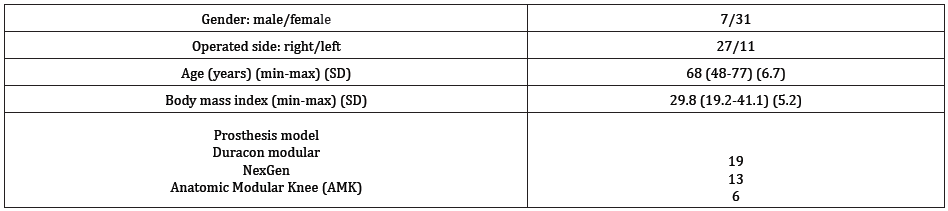
Thirty-eight patients who were scheduled to undergo unilateral TKA were recruited from the waiting list of the Orthopedic Department at Kuopio University Hospital between June 1997 and January 2000. Of these patients, 82% (n=31) were female. The mean age of the study population was 68 years (range 48-77 years, SD 6.7 years) and the mean body mass index (BMI) was 29.8 (19.2-41.1, SD 5.2). Thirty-five of the patients had a knee with primary OA and two with posttraumatic OA (not including prior bone-affecting traumas, only open or arthroscopic meniscectomy). One patient had a bone necrosis of the lateral femoral condyle. Periprosthetic femoral and tibial BMD changes of the same study population were previously published [6,7]. Joint replacement of the contralateral knee or either hip before the scheduled surgery or during the follow-up period were considered exclusion criteria. Unilateral cemented TKA with all components cemented was performed on patients using standard techniques.

Patients were free from any diseases and were not taking any medications known to influence bone mineral metabolism, which was reconfirmed at every follow-up visit and BMD measurement appointment during the follow-up period. The female patients were all postmenopausal. A radiograph of the knee scheduled for operation was taken preoperatively. All patients were operated on by experienced orthopedic surgeons. Full weight-bearing was permitted immediately after the surgery. A continuous passive motion (CPM) device was used if necessary, to ensure early mobilization (12 patients, 31.6%). The American Knee Society (AKS) score was used to clinically evaluate patient status and function of the operated knee during daily activities preoperatively and postoperatively at the follow-up visits at 1, 2 and 4 years. The baseline characteristics of patients and the prosthesis models used are presented in (Table 1).

Table 1: General baseline characteristics of 38 total knee arthroplasty patients followed up for 4 years.


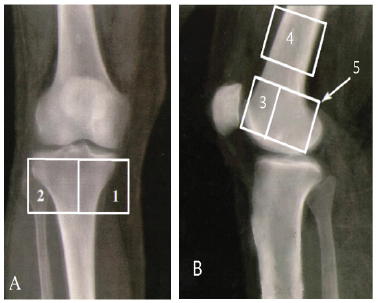
Figure 1: The regions of interest (ROIs) for bone mineral density (BMD) in the contralateral knee. Anteroposterior view (a) of medial metaphyseal (1) and lateral metaphyseal ROIs (2). Lateral view (b) of metaphyseal anterior (3), diaphyseal (4) and total metaphyseal ROIs (5)


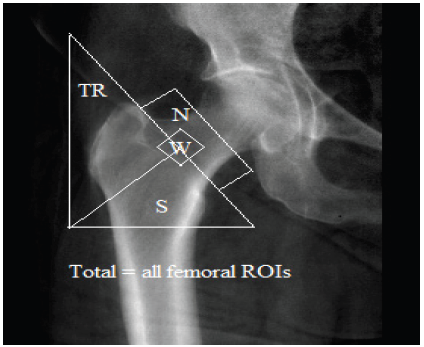
Figure 2: The regions of interest (ROIs) for bone mineral density (BMD) of the hip, measured by dualenergy X-ray absorptiometry (DEXA), including the neck (N), Ward’s triangle (W), trochanter (TR), shaft (S) and total femur (including all femoral ROIs).


The BMD of the opposite knee and both hips was measured by fan-beam dual-energy X-ray absorptiometry (DEXA, Lunar Expert, Lunar Co., USA). A total of four measurements were taken, the first within a week of the operation and the others at 1, 2 and 4 years postoperatively. In the contralateral knee, the regions of interest (ROIs) were both metaphyseal and diaphyseal to indicate the BMD changes of both the trabecular (metaphyseal) and the cortical (diaphyseal) bone (Figure 1). The femoral neck and total area were measured in the proximal femurs (Figure 2). Precision, expressed as the coefficient of variation (CV) for repeated BMD measurement of these ROIs, was 2.5% (range 2.2-2.9%) in the proximal tibia and 3.2% (1.7-5.4%) in the distal femur in a study by Soininvaara [12]. For the proximal femur, the CV% was 1.8% for the femoral neck and 0.9% for total proximal femur [13].

The study protocol was approved by the local ethics committee (decision number 71/97, 13th of May 1997). All patients gave written informed consent. The statistical analysis was performed using SPSS software, version 19 (SPSS Inc., Chicago, IL, USA). A mixed model based on linearly independent pairwise comparisons among the estimated marginal means was used to assess the correlation between measurements as well as to manage missing data. A mixed model was used to assess the association between the AKS score and changes in BMD at the measured ROIs at the four determined time points. In the model, the BMD measurements and the AKS scores were defined as random effects. Patient age at the time of the operation was tested as a covariant for BMD changes. The differences between the values of proximal femoral BMD of the contra-and ipsilateral hips were analyzed by paired-sample t-tests. A linear regression model was used to examine the correlation between BMD data and AKS and functional scores at all four time points. All analyzed BMD data were confirmed to be normally distributed by histograms of the residuals in the mixed model. The results are presented as the mean and standard error. P-values less than 0.05 were considered statistically significant.

Results

Clinical evaluation and missing data

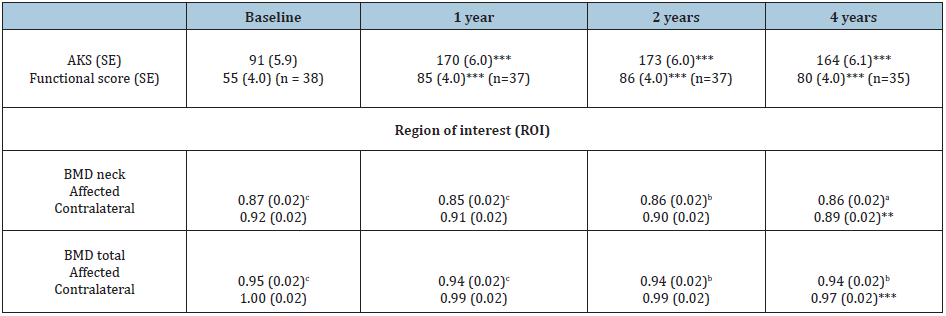
The AKS score improved from the baseline mean value of 91 (SE 5.9) up to 170 (SE 6.0) in one year, and this improvement persisted until the end of the 4-year follow-up period (173 (SE 6.0) after 2 years and 164 (SE 6.1) after 4 years, p<0.001 in all time points; (Table 2). Similar improvement was found for patient functional scores (Table 2). One AKS score and functional score was missing at the 1-and 2-year time points, and three scores were missing at the 4-year follow-up. All patients in the study visited the hospital for BMD measurements until 4-years postoperative. However, some femoral diaphyseal BMD data was lost (one patient throughout the follow-up, four individual measurements at the 1-year and two at the 2-year follow-up).

Table 2: Mean and standard error (SE) of American Knee Society (AKS) score, functional score and bone mineral density (BMD) of proximal femurs of 38 total knee arthroplasty patients over a 4-year follow-up.

**p<0.01 compared to baseline (mixed model) *** p<0.001 compared to baseline (mixed model) ap<0.05 between the affected and contralateral ROI BMD values (paired samples t-test, two-tailed significance) bp<0.01 between the affected and contralateral ROI BMD values (paired samples t-test, two-tailed significance) cp<0.001 between the affected and contralateral ROI BMD values (paired samples t-test, two-tailed significance


Proximal femoral bone mineral density

The baseline postoperative BMD values of the affected side femoral neck and total femoral ROIs were significantly lower than the values of the contralateral side (6.6% and 5.1%, respectively; p<0.001), and the difference remained significant throughout the follow-up period (3.4% and 3.1%, p<0.05 and p<0.01, respectively, at 4 years) (Table 2). For the hip on the affected side, there were no significant changes in BMD of the femoral neck or total femoral ROIs during the 4-year follow-up (Table 2). For the contralateral side hip, there was a significant decrease in femoral neck (3.3%, p<0.01) and total femoral (3.0%, p<0.001) BMD over 4 years (Table 2). Patient age at the time of the operation was a significant covariate for both affected and contralateral side femoral neck BMDs (p=0.035 and 0.015, respectively) and total femoral BMD of the contralateral hip at baseline (p=0.030). However, the age was not significantly associated with any BMD changes of the hips. The mean total BMD of the affected side proximal femur, despite being significantly lower than the contralateral side, was higher than age- and sex-matched public mean values, and the mean Z-scores were +0.2SD to +0.3SD during the follow-up period. Ten out of 38 patients (26.3%) had Z-scores more than +1 SD, and this number increased to 15 out of 38 patients (39.5%) at 4 years. On the other hand, out of the 38 patients, only one patient (2.6%) at baseline and three patients at 4 years (7.9%) were found to be osteoporotic according to the ethnic criteria as judged by a T-score below -2.5SD in the total measurement area.

Changes in bone mineral density of the contralateral knee

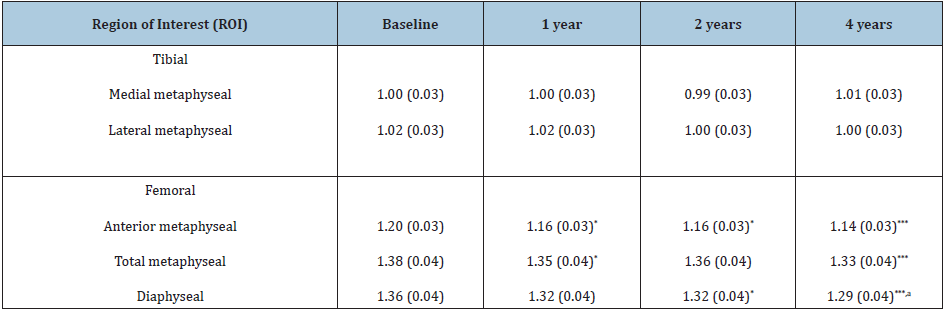
There was a significant BMD decrease in the anterior metaphyseal ROI at the 1-year follow-up (3.3%, p=0.044), and this decrease continued up to 4 years postoperative (5.0%, p<0.001) (Table 3). In the total femoral metaphyseal ROI, the decrease was also significant in the measurement performed after 1 year (1.7%, p=0.031) and 4 years (3.6%, p<0.001) compared to baseline (Table 3). In the femoral diaphyseal ROI, there was a significant BMD decrease at the 2-year (2.9%, p=0.036) and 4-year (5.1%, p<0.001) follow-up (Table 3). No statistically significant changes were found in the tibial metaphyseal measurements.

Table 3: Mean tibial and femoral bone mineral density values and standard error (SE) of the contralateral knee of 38 total knee arthroplasty patients over a 4-year follow-up period.

*p<0.05 compared to baseline (mixed model) ***p<0.001 compared to baseline (mixed model) ap<0.05 compared to the 1-year measurement (mixed model)


Correlations between bone mineral density and the American Knee Society score and functional score

There was a positive correlation between the AKS score and BMD of the contralateral side hip total femoral ROI in the measurements taken 2 and 4 years postoperatively (r=0.414 and r=0.431, respectively, p=0.011 for both), as well as for the contralateral side femoral neck ROI at 4 years postoperatively (r=0.411, p=0.016). The functional score was correlated with higher BMD values in the contralateral hip total femoral ROI at 1, 2 and 4-years postoperative (r=0.374, r=0.482 and r=0.426, p=0.023, p=0.002 and p=0.012, respectively). In the measurements taken 4 years postoperative, the functional score also showed a positive correlation with the BMD of the contralateral femoral neck ROI (r=0.391, p=0.022).

Discussion

This mid-term follow-up study of 38 patients provided many interesting findings. Firstly, the contralateral hip BMD was higher at baseline and remained higher when compared to the side of the affected hip during the entire 4-year follow-up period. Similar, but non-significant results, were published by Kim et al. [3] in a study involving a preoperative assessment and a short postoperative period, as well as a 2-year follow-up study performed by Ishii et al. [11]. This difference began to level, evidenced by a significant decrease in BMD on the contralateral side, resembling age-related annual bone loss of 0.76% of femoral neck and 0.70% of total hip published by Greenspan et al. [14], but not on the hip of the affected side. Considering these results, we might expect that TKA could prevent further loss in BMD on the operative side, and even levelling the bone mineral balance between both hips. Patient age at the time of the operation was found to be significant covariate at the baseline, but it was not significantly associated with the BMD changes. We previously reported [4] that the baseline BMD of the proximal femur on the operative side was significantly lower than that of the contralateral side in all regions of interest, and this difference remained 1-year after TKA. In this study, we thought that the baseline BMD deficiency of the affected side represented disuse- based BMD loss as a result of preoperative exercise restriction due to pain and limiting daily living activities.

The second major finding of the current study was that the distal femoral BMD of the control knee decreased during the midterm follow-up period. This decrease may be partly explained as a response of the metaphyseal bone to the immediate postoperative phase of impaired function. The minor change observed after the first postoperative year could again be considered an age-related phenomenon. Järvenpää et al. published distinctly deeper decrease in the same ROIs of periprosthetic BMD concerning mainly the same patient population (16.8% in anterior metaphyseal, 20.1% in total metaphyseal and 11.1% in diaphyseal ROIs compared to 5.0%, 3.6% and 5.1% respectively in the contralateral knee in our study) [6]. This difference indicates the influence of stress shielding phenomenon of the femoral prosthesis component. Nevertheless, improved mobility after TKA could not ameliorate the preoperative disuse-associated bone loss in the distal femoral metaphysis and the 5.0% decrease of the anterior femoral metaphysis of the contralateral knee indicates, that stress shielding of the anterior flange of the femoral component is not entirely responsible for the BMD decrease of the anterior femoral metaphyseal periprosthetic bone. The tibial metaphysis BMD remained relatively stable, with no significant BMD losses or gains either in the early phase or during the follow-up. We could not identify any specific reason for this difference in metaphyseal bone behavior of the distal femur and proximal tibia.

Another finding was the positive correlation between better functional status of the patient and higher BMD values in the contralateral side hip, for which the decrease in BMD was statistically significant. Considering that this would help prevent BMD loss on the affected side, it might even further reduce the hip fracture risk. This is a promising result, as it suggests that a well-functioning knee prosthesis could also improve BMD. In the current study, however, we did not assess the radiological status of the hips. Therefore, we do not know the degree of arthrosis of these joints, which might influence both the BMD results and the functional capability of the subjects. On the other hand, study subjects who required total arthroplasty of either hips were excluded from the study, thus reducing the probability of considerable hip OA in the study population. As the measured hip ROIs are extra-articular, we might expect that sclerosis formation and the possible development of hip arthrosis to have a minimal effect on the BMD results. The strengths of our study are the long follow-up period, very few missing data and the study design, which is considered to be precise and reproducible. In order to determine whether the BMD difference between the affected and contralateral side hips equalized, we would need to perform a longer follow-up than the one undertaken in this study.

In summary, TKA could not improve mobility of the studied patient population enough to increase the BMD values of the hips or the contralateral knee. Nevertheless, it seemed to stabilize the BMD of the hip on the affected side, which was significantly lower than the contralateral side hip immediately after surgery. There was a positive correlation between good functional status and high BMD of the contralateral hip. However, we do not know if this was partly due to the development of arthrosis in these adjacent joints because the radiological status of these joints was not assessed. Nevertheless, a well-functioning total knee prosthesis may have capability to preserve BMD of the hips.

Acknowledgement

The authors thank research nurses Raija Kantanen, Eila Koski and Elina Jalava for technical assistance and biostatisticians Marja- Leena Lamidi and Tuomas Selander for assistance with statistics. The corresponding author thanks the State Research Fund of Finland and the Kuopio University Hospital Research Fund for financial help to conduct the study.

Ethical Approval

All procedures performed in studies involving human participants were in accordance with the ethical standards of the institutional and/or national research committee and with the 1964 Helsinki declaration and its later amendments or comparable ethical standards. The study protocol was approved by the local ethics committee (decision number 71/97, 13th of May 1997). Informed consent was obtained from all individual participants included in the study.

References

  1. Skou ST, Roos EM, Laursen MB, Rathleff MS, Arendt NL, et al. (2015) A randomized, controlled trial of total knee replacement. N Engl J Med 373(17): 1597-606.
  2. Beaupre LA, Rezansoff A, Clark M, Jen H, Lambert RG, et al. (2015) Bone mineral density changes in the hip and spine of men and women 1-year after primary cemented total knee arthroplasty: Prospective cohort study. J Arthroplasty 30(12): 2185-2189.
  3. Kim KK, Won YY, Heo YM, Lee DH, Yoon JY, et al. (2014) Changes in bone mineral density of both proximal femurs after total knee arthroplasty. Clin Orthop Surg 6(1): 43-48.
  4. Soininvaara TA, Miettinen HJA, Jurvelin JS, Alhava EM, Kröger HPJ (2004) Bone mineral density in the proximal femur and contralateral knee after total knee arthroplasty. J Clin Densitom 7(4): 424-431.
  5. Hannan MT, Felson DT, Dawson HB, Tucker KL, Cupples LA, et al. (2000) Risk factors for longitudinal bone loss in elderly men and women: The framingham osteoporosis study. J Bone Miner Res 15(4): 710-720.
  6. Järvenpää J, Soininvaara T, Kettunen J, Miettinen H, Kröger H (2014) Changes in bone mineral density of the distal femur after total knee arthroplasty: A 7-year DEXA follow-up comparing results between obese and nonobese patients. Knee 21(1): 232-235.
  7. Jaroma A, Soininvaara T, Kröger H (2016) Periprosthetic tibial bone mineral density changes after total knee arthroplasty. Acta Orthop 87(3): 268-273.
  8. Feng X, McDonald JM (2011) Disorders of bone remodeling. Annu Rev Pathol 6: 121-145.
  9. De Laet CE, Hout BA, Burger H, Hofman A, Pols HA (1997) Bone density and risk of hip fracture in men and women: Cross sectional analysis. BMJ 315(7102): 221-225.
  10. Cummings SR, Black DM, Nevitt MC, Browner W, Cauley J, et al. (1993) Bone density at various sites for prediction of hip fractures. The study of osteoporotic fractures research group. Lancet 341(8837): 72-75.
  11. Ishii Y, Yagisawa K, Ikezawa Y (2000) Changes in bone mineral density of the proximal femur after total knee arthroplasty. J Arthroplasty 15(4): 519-522.
  12. Soininvaara T, Kröger H, Jurvelin JS, Miettinen H, Suomalainen O, et al. (2000) Measurement of bone density around total knee arthroplasty using fan-beam dual energy x-ray absorptiometry. Calcif Tissue Int 67(3): 267-272.
  13. Huuskonen J, Väisänen SB, Kröger H, Jurvelin JS, Penttilä I, et al. (2002) Relation of sex hormones to bone mineral density in middle-aged men during a 4 year exercise intervention trial. Bone 31(1): 51-56.
  14. Greenspan SL, Maitland LA, Myers ER, Krasnow MB, Kido TH (1994) Femoral bone loss progresses with age: A longitudinal study in women over age 65. J Bone Miner Res 9(12): 1959-1965.


For more articles in Orthopedic Research Online Journal
Please click on below link: https://crimsonpublishers.com/oproj/

Wednesday, February 2, 2022

Combating Negative Effect of Negative Energy Balance in Dairy Cows: Comprehensive Review_Crimson Publishers

Combating Negative Effect of Negative Energy Balance in Dairy Cows: Comprehensive Review by Amanuel Bekuma in Approaches in Poultry, Dairy & Veterinary Sciences_journal of animal science


Abstract

The increase of milk production has been accompanied by increasing incidence of health problems, declining ability to reproduce and declining the fertility of modern dairy cows. High producing dairy cows need to mobilize body reserve to be able to sustain their milk production. During early lactation, there were elevated demand for energy for more milk production, but a lag in feed intake created negative energy balance. Until energy intake assures the requirements, dairy cows, especially high producing breeds, enter a state of negative energy balance (NEB) that leads to economic losses through decreased milk production, decreased reproductive performance and increased risks of disease incidences. Increased energy intake, decreased dry period length and improved fertility are among the universal approach in combating the negative effect of negative energy balance in dairy industry.

Keywords: Combating; Dairy cow; Energy balance; Negative effect

Introduction

Introduction

The increase in milk yield has been accompanied by declining ability to reproduce, increasing incidence of health problems and declining longevity in modern dairy cows [1]. The energy expended in producing a lot of milk during peak production is not commensurate to the amount of energy derived from the feed consumed due to increased concentration of sex hormones, incipient mobilization of lipid and reduced rumen capacity lead to NEB in early lactation [2]. To compensate for the deficit the cow begins to mobilize its energy reserves, although, this does not enable it to meet the requirement and therefore goes to a state of negative energy balance. The amount of energy for milk production and maintenance exceeds the energy derived from the feed intake and body energy reserves. Soon after parturition, the cow’s diet changed from dry cow feed, which is relatively low to a high-energy one, however, the cow’s low appetite and capacity cannot allow her to consume adequate amounts required for energy for production of milk and body maintenance. During this struggle, cows are in a state that is referred to as negative energy balance, where daily energy balance is determined by the amount consumed (feed energy) as compared to the requirements for milk production and maintenance [3]. Negative energy balance (NEB) is of interest in the dairy industry because it does not only affect production and reproduction performances but is also an animal welfare matter. Animals in NEB usually loss body condition after calving usually occurring at 50 to 100 days post-calving [4], which is a recognized animal welfare problem. There is appearing evidence that high yielding cows which loose body condition during periods of NEB become lame. Lameness is associated with animal welfare and has substantial negative effects on fertility performance and reproductive parameters, which would eventually lead to culling. However, there is a big gap and inadequate compiled information that clearly indicates on negative effect of negative energy balance on dairy cows and available combating strategies. Hence, it is important to revising the negative effect of negative energy balance on dairy cows and postulating ways of combating.

Concept of negative energy balance in dairy cows

Energy balance is defined as the difference between energy intake from feed and energy required for body maintenance, production and gestation [5]. When animals are in negative energy balance, they undergo several physiological and metabolic changes which may predispose them to several negative effects like poor reproduction performance and poor immunity. Dairy cattle are at increased risk for many diseases and disorders during early lactation, especially during the first third of lactation [6].

Effect of negative energy balance (neb)on reproduction performance

Negative Energy Balance during early lactation in dairy cows leads to alterations in metabolic state that has major effects on the production of insulin-like growth factor (IGF) and related metabolites [7]. Since Insulin Growth Factor (IGF) plays an important role in follicular growth and embryonic development [8]. it becomes evident that reproduction potential is affected in animals that enter a state of NEB. High producing dairy cows have been observed to be more prone to NEB shortly after parturition, a situation that can impair reproductive recovery because EB is negatively correlated with days to first ovulation after calving and cows [9].

Effects on the ovary

Negative energy balance is associated with a greater incidence of irregular cycles that can both increase the interval to first service and reduce conception rates [10,11]. Problems include a delay to the first ovulation (DOV1), cycles which are longer than the normal range (Prolonged Corpus Luteum, PCL) and long intervals between successive luteal phases, when cows fail to ovulate again at an appropriate time (DOV2).

Effects on the uterus

Uterine involution is a critical component of postpartum reproduction, which involves endometrial tissue repair, myometrial contraction and bacterial clearance. Negative energy balance impede uterine recovery due to a delay in the clearance of puerperal pathogens, so histological sections taken from both uterine horns were also examined for the presence of immune cells. Poor energy balance status is associated with a greater degree of uterine inflammation following calving and a slowing of the repair process [12].

Effects on body condition

Body condition score decreases as body reserves are mobilized to compensate for negative energy balance in early lactation leading to detrimental effects on the performance of the animal [13]. Animals that suffered negative energy balance failed to reach peak milk production in 16 weeks and eventually lost weight and had reduced conception rates [14].

Effects of negative energy balance on immune functions

The alteration in metabolites associated with negative energy balance can result in an altered immune response to pathogens. In dairy cows the onset of lactation causes nutritional and energy requirements to increase dramatically which leads to a state of negative energy balance. Due to this NEB, mobilization of the body’s reserves occur leading to an increase in plasma ketone levels and is often accompanied by health disorders such as mastitis and endometritis. These problems are reflected in the degree of increase in ketone levels and decrease in glucose. The immune system relies on energy availability through oxidative phosphorylation; therefore, in NEB the immune system (e.g. macrophage function) is impaired in association with hypoglycemia and ketosis [15,16].

Effect of negative energy balance (neb) on cows’ health status

Animals in negative energy balance have a reduced immune response which later results in several negative events like mastitis, lameness, respiratory diseases and metritis [17]. Dairy cows in severe NEB had increased somatic cell count in milk (SCC). SCC in milk, which can act as an indicator of subclinical mastitis, was observed to be higher in animals with four and more lactations [18]. Since animals in a state of negative energy balance eventually lose weight, this could also contribute to the development of lameness [19]. Lameness is painful and will restrict the animals from normal movement and eventually feed intake, especially for pasture dependant feeding, which would lead to a chain of undesirable events including poor animal welfare. Negative energy balance and Left displaced abomasum (LDA) is positively correlated [20].

Effect of Negative Energy Balance on Udder Health

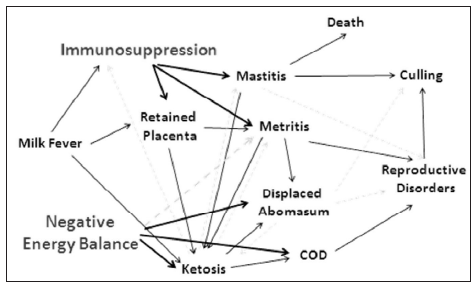
Subclinical ketosis is highly associated with several periparturient diseases, including subclinical and clinical mastitis. The mechanisms of udder defence against mastitis are impaired in periods of negative energy balance and hyperketonemia. Nutritional management and monitoring program show promise for alleviation of the impact of negative energy balance on mastitis and other periparutrient diseases [21]. Generally, several adverse consequences of NEB have been investigated and documented which include metabolic disorders such as ketosis and acetonaemia, reproduction disorders such as anoestrous and infertility, and other health problems such as increased susceptibility to mastitis [22]. NEB is believed to have an influence on several production and physiological parameters in dairy cows as outlined in the causal diagram in (Figure 1).

Figure 1:Complex interrelationships of negative energy balance: The light shaded lines represent weak associations among different parameters. Source: McKay and Heuer, 2000 modified.


Combating Strategies

Increased energy intake

Supplementation with unsaturated FA (trans-octadenoic and linoleic acids) have been shown to improve embryo quality and development, leading to overall higher pregnancy rates and reduced pregnancy losses. Perhaps by the same or a separate mechanism, feeding omega-3 unsaturated Fatty Acid in fish oil exerted immunosuppressive effects during the breeding period in association with improved fertility in dairy cows [23]. Glucogenic diets fed during the transition period and early lactation decreased milk fat and milk energy output and tended to stimulate the partitioning of energy to body reserves and improve the energy balance in early lactation compared with lipogenic diets [24].

Decreased dry period length

An alternative strategy of shortening the dry period has been proposed as a means to improve energy status of dairy cows after calving through enhanced Dry Matter Intake or moderate decreases in milk energy output [25,26]. Reducing the dry period length from 55 to 34days decreased days to first ovulation after calving; percentage of an ovulatory cow, and days to pregnancy. Shortening the dry period, especially for older cows appears to be a successful strategy for improving reproductive efficiency [27].

Rationing software

Computer modeling through rationing software allows educated guesses to be made about how likely a diet is to induce excessive negative energy balance. Using a reputable nutritionist to formulate dry and early lactation diets will help prevent feeding errors that lead to under supply of metabolisable energy. Regular sampling & analysis of conserved forages are a vital part of reducing feeding errors caused by variation in nutritive qualities within the clamp [27-33].

Record keeping

If accurate clinical records are kept, monitoring metabolic disease incidence can gives some indication of how well transition cow management is functioning. Herds with high incidence of metabolic disease or culling within the first 60days should certainly involve their veterinary surgeon for further investigation.

Conclusion and Recommendation

Negative energy balance around calving adversely affects the future fertility of the cow. This is duet the fact that negative energy balances have several adverse consequences on production and production performance and immune function of dairy cows. Considerations therefore need to be given on an individual farm basis as to the optimum genotype to select for that environment, to provide animals in the herd which can achieve reasonable yields whilst maintaining health and fertility. Therefore, based on the above conclusion the following recommendations are forwarded:

1. Nutritional management and monitoring program show promise for alleviation of the impact of negative energy balance in dairy cows;

2. Feeding a controlled energy diet during the dry period, increased feeding frequency and better feed through management to maintain a fresh, adequate supply of feed and multiple sources of clean water are critical for stimulating appetite and maximizing dry matter intake.

References

    1. Laven RA, Scaramuzzi RJ, Wathes DC, Peters AR, Parkinson TJ (2007) Recent research on the effects of dietary nitrogen on the fertility of dairy cows. Vet Rec 160(11): 359-362.

    2. Kodakowa H, Blache D, Yomada Y, Martin GB (2000) Relationships between changes in plasma Concentration of laptin before and after parturition and the timing of first postpartum ovulation in high producing Holstein dairy cows. Reprod Fertil Dev 12(7-8): 405-411.

    3. Roche JR, Friggens NC, Kay JK, Fisher MW, Stafford KJ, (2009) Invited review: Body condition score and its association with dairy cow productivity, health, and welfare. J Dairy Sci 92(12): 5769-5801.

    4. Alawneh JI, Stevenson MA, Williamson NB, Lopez Villalobos N, Otley T (2012) The effect of liveweight change on reproductive performance in a seasonally calving, pasture fed dairy herd. Livestock Science 145(1-3): 131-139.

    5. Leslie K, Duffield T, Le Blanc S (2003) Monitoring and managing energy balance in the transition dairy cow, Dep. Population Med. Univ. of Guelph. J Dairy Sci 86: 101-107.

    6. Defrain JM, Hippen AR, KalscheurKF, Jardon PW (2004) Feeding glycerol to transition dairy cows: Effects on blood metabolites and lactation performance. Journal of Dairy Science 87(12): 4195-4206.

    7. Kirby CJ, Thatcher WW, Collier RJ, Simmen FA, Lucy MC (1996) Effects of growth hormone and pregnancy on expression of growth hormone receptor, insulin-like growth factor-I, and insulin-like growth factor binding protein-2 and -3 genes in bovine uterus, ovary, and oviduct. Biology of Reproduction 55(5): 996-1002.

    8. Beam SW, Butler WR (1997) Energy balance and ovarian follicle development prior to the first ovulation postpartum in dairy cows receiving three levels of dietary fat. Biology of Reproduction 56(1): 133-142.

    9. Taylor VJ, Beever DE, Wathes DC (2003) Physiological adaptations to milk production that affect fertility in high yielding dairy cows. In: Dairying, using science to meet consumer needs. Br Soc Anim Sci 29: 37-71.

    10. Laven RA, Scaramuzzi RJ, Wathes DC, Peters AR, Parkinson TJ (2007) Recent research on the effects of dietary nitrogen on the fertility of dairy cows. Vet Rec 160(11): 359-362.

    11. Collard BL, Boettcher PJ, Dekkers JCM, Petitclerc D, Schaeffer LR (2000) Relationships between energy balance and health traits of dairy cattle in early lactation. J Dairy Sci 83(11): 2683-2690.

    12. Rukkwamsuk T (2010) A field study on negative energy balance in periparturient dairy cows kept in small-holder farms: Effect on milk production and reproduction. Afr J Agric Res 5(23): 3157-3163.

    13. Collard BL, Boettcher PJ, Dekkers JCM, Petitclerc D, Schaeffer LR (2000) Relationships between energy balance and health traits of dairy cattle in early lactation. J Dairy Sci 83(11): 2683-2690.

    14. Cheng Z, Wickham I, Morris D, Wathes DC (2014) Increased beta-hydroxybutyrate production interrupts splenic immunity in dairy cows with postpartum negative energy balance. BSAS Annual Conference, Nottingham, USA, p. 209.

    15. Flannery L, Morris DG, Lawless S, Quinlan L, Hynes AC (2013) The effects of energy metabolites on bovine macrophage activity in vitro. In: Agricultural Research Forum, Tullamore, Offaly, p. 121.

    16. Coyne G, Kenny DA, Morris DG, Waters S (2009) Effects of dietary n-3 polyunsaturated fatty acid on bovine endometrial gene expression. In: Walsh Fellowship Seminar, RDS, Dublin, Ireland, p. 9.

    17. Moyes KM, Drackley JK, Salak Johnson JL, Morin DE, Hope JC, et al. (2009) Dietary-induced negative energy balance has minimal effects on innate immunity during a streptococcus uberis mastitis challenge in dairy cows during midlactation. J Dairy Sci 92(9): 4301-4316.

    18. Syridion D, Layek SS, Behera K, Mohanty TK, Kumaresan A, et al. (2012) Effects of parity, season, stage of lactation, and milk yield on milk somatic cell count, pH and electrical conductivity in crossbred cows reared under subtropical climatic conditions. Milchwissenschaft-Milk Science International 67(4): 362-365.

    19. Alawneh JI, Stevenson MA, Williamson NB, Lopez-Villalobos N, Otley T (2014) The effects of liveweight loss and milk production on the risk of lameness in a seasonally calving, pasture fed dairy herd in New Zealand. Prev Vet Med 113(1): 72-79.

    20. Cameron REB, Dyk PB, Herdt TH, Kaneene JB, Miller R, et al. (1998) Dry cow diet, management and energy balance as risk factors for displaced abomasum in high producing dairy herds. J Dairy Sci 81(1): 132-139.

    21. Santman Berends IM, Olde Riekerink RG, Sampimon OC, van Schaik G, Lam TJ (2012) Incidence of subclinical mastitis in dutch dairy heifers in the first 100 days in lactation and associated risk factors. J Dairy Sci 95(5): 2476-2484.

    22. Bareille N, Noordhuizen J (2008) Diagnosing a negative energy balance in a dairy cattle herd. Le Nouveau Praticien Veterinaire Elevages et Sante (7): 67-70.

    23. Silvestre FT, Carvalho TS, Crawford PC, Santos JEP, Staples CR, et al. (2011) Effects of differential supplementation of fatty acids during the peripartum and breeding periods of Holstein cows: I. Uterine and metabolic responses, reproduction, and lactation. J Dairy Sci 94(1): 2285-2301.

    24. Van Knegsel AT, van den Brand H, Dijkstra J, Kemp B (2007) Effects of dietary energy source on energy balance, metabolites and reproduction variables in dairy cows in early lactation. Therigenology 68 (Suppl 1): S274-S280.

    25. Grummer R R (2007) Strategies to improve fertility of high yielding dairy farms: Management of the dry period. Theriogenology 68(Suppl 1): S281-S288.

    26. Grummer RR (2011) Nutritional implications of altering the dry period length. Florida Ruminant Nutrition Symposium 22: 20-31.

    27. Grummer RR, Wiltbank MC, Fricke PM, Watters RD, Silva Del Rio N (2010) Management of dry and transition cows to improve energy balance and reproduction. J Reprod Dev 56(Suppl): S22-S28.

    28. Geert O (2013) High yielding dairy cows: To produce or to reproduce and what practitioners should know about this to help their clients. Mac Vet Rev 36(2): 53-62.

    29. Kodakowa H, Blache D, Yomada Y, Martin GB (2000) Relationships between changes in plasma Concentration of laptin before and after parturition and the timing of first postpartum ovulation in high producing Holstein dairy cows. Reprod Fertil Dev 12(7-8): 405-411.

    30. Moyes KM, Drackley JK, Salak Johnson JL, Morin DE, Hope JC, et al. (2009) Dietary-induced negative energy balance has minimal effects on innate immunity during a streptococcus uberis mastitis challenge in dairy cows during midlactation. J Dairy Sci 92(9): 4301-4316.

    31. Patton J, Kenny DA, Mee J F, O’Mara FP, Wathes D C, et al. (2006) Effect of milking frequency and diet on milk production, energy balance and reproduction in dairy cows. J Dairy Sci 89(5): 1478-1487.

    32. Reynolds CK, Aikman PC, Lupoli B, Humphries DJ, Beever DE (2003) Splanchnic metabolism of dairy cows during the transition from late gestation through early lactation. J Dairy Sci 86(4): 1201-1217.

    33. Wathes DC, Fenwick M, Cheng Z, Bourne N, Llewellyn S, et al. (2007) Influence of negative energy balance on cyclicity and fertility in the high producing dairy cow. Theriogenology 68(Suppl 1): S232-S241.

    https://crimsonpublishers.com/apdv/fulltext/APDV.000633.php

    Publishers: https://crimsonpublishers.com/


    For more articles in journal of animal science
    Please click on below link: https://crimsonpublishers.com/apdv/

Tuesday, February 1, 2022

Nano-Gene-Delivery: Overcoming One of the Major Challenges in Gene Therapy_Crimson Publishers

Nano-Gene-Delivery: Overcoming One of the Major Challenges in Gene Therapy by Sonia Trigueros in Research in Medical & Engineering Sciences_journal of medical sciences research


Mini Review

Adeno-associated virus vectors (AAVs) have been used in several gene-therapy protocols since they are non-integrative and less immunogenic compared to retroviruses or lentiviruses, but several concerns such as small size capacity, high production costs, probability of immunogenicity, and their invasive route of administration has fostered the design of non-viral vectors as an alternative. Non-viral vectors are less immunogenic, do not induce major inflammatory responses, are safe and easy to produce in large scale. Nonetheless, their main limitation still is the lower cell transfection efficiency. Non-viral particles can be divided into three groups, lipoplex particles containing lipid molecules, polyplex particles based on polycations (sugars, proteins or other polymers), and inorganic nanostructures. Gene-delivery by synthetic vectors involves the endocytosis of DNA-complexes, endosomes escape, and diffusion of non-complexed DNA through the cytosol to reach the nucleus.

Nanotechnology on gene delivery

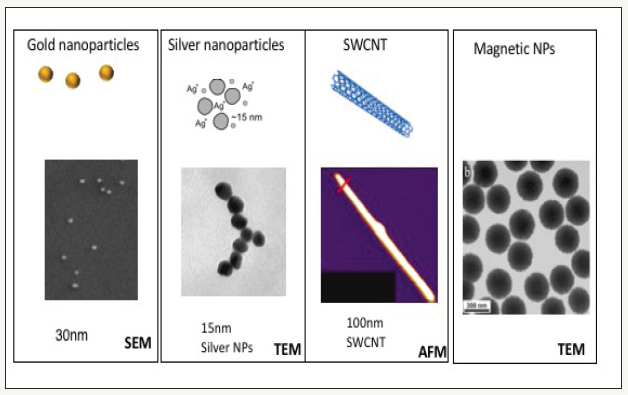
Sereval nanomaterials are being develop for gene-delivery use. They are considered into the group of non-viral vectors. There are several requirements for developing a device small ehought to efficiently leave the vasculature and enter cells to perfome multiple tasks [1]. There are some limitations yet to be resolve for their use in the gene delivery studies, namely, potential toxicity, low transfection efficiency. Undeniaby, shape and novel properties at the nanoscale are esential to fullfill the needs. More over, selected nanomaterial has to have the ability to incorporate genetic materials such as plasmid DNA, RNA, and siRNA. Considering that non-viral vectors tested so far show very low efficiency of gene delivery [2], there is a need to develop and test nanoparticles with novel and precised physicochemical propierties (Figure 1).

figure 1: Inorganic NPs genereted in Trigueros’ group as backbone nano-gene-delivery systems.


Emerging nanomaterials with versatile properties such as optical, piezoelectric, thermal, electrochemical, enzyme-mimicking etc. are still being developed. With the proper combination of novel properties, nanotechnology will bring to us new and exciting tools to explore the design of innovative, efficient, accurate, stable, low toxicity nano-gene-delivery vectors [3]. It is easy to imagine, that a further development of nanotechnology, nanomaterials and nano-gene-delivery will, undoubtedly, make a significant impact on biomedical research and translational medicine.

References

  1. Blanco E, Shen H, Ferrari M (2015) Principles of nanoparticle design for overcoming biological barriers to drug delivery. Nat Biotechnol 33(9): 941-951.
  2. Lah NAC, Samykano M, Trigueros S (2016) Nanoscale metal particles as nanocarriers in targeted drug delivery system. J Nanomed Res 4(2): 00086.
  3. Garcia-Guerra A, Dunwell TL, Trigueros S (2018) Nano-scale gene delivery systems: current technology, obstacles, and future directions. Curr Med Chem 25(21): 2448-2464.
For more articles in journal of medical sciences research
Please click on below link: https://crimsonpublishers.com/rmes/

Main Temperature Dependent Parameters of the Exponential Absorption Spectrum of a-Si: H _ Crimson Publishers

Main Temperature Dependent Parameters of the Exponential Absorption Spectrum of a-Si: H by Muminov KhA in Research & Development in Ma...